Pillar Guide
Coaching, self-study, or mentorship for CAT
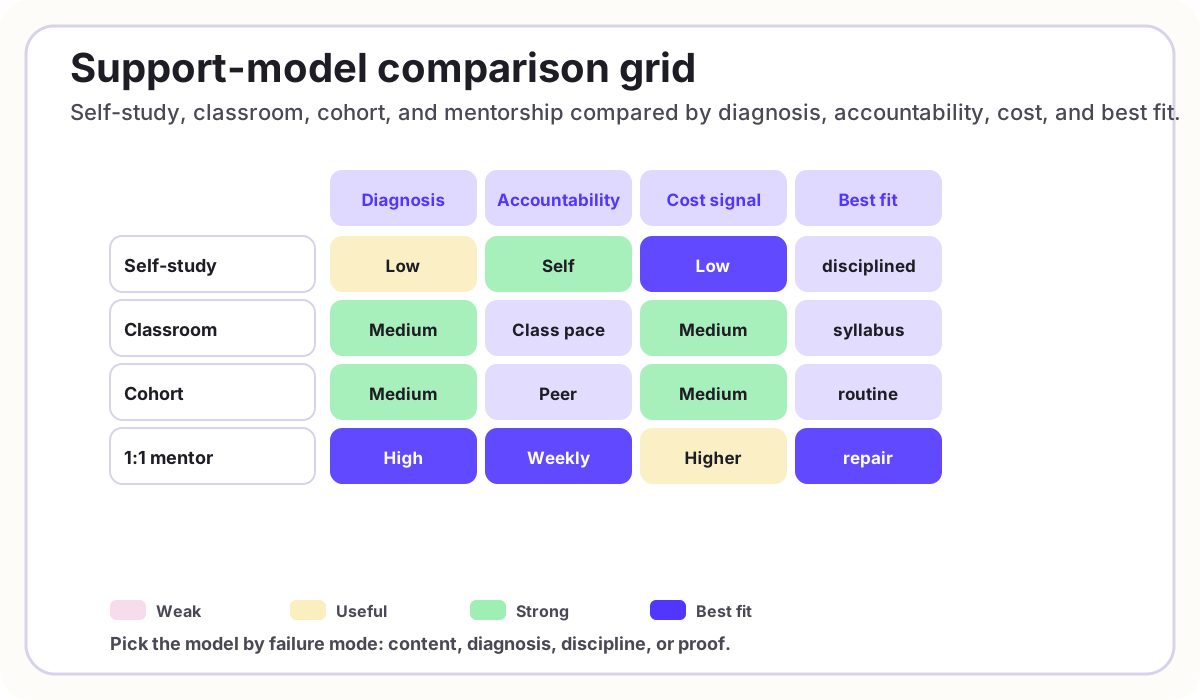
CAT support is not a binary choice between coaching and self-study. A useful support model changes a specific failure mode: weak structure, repeated errors, low accountability, or interview unreadiness. The right answer can be one model now and a different model after the next 30-day evidence cycle.
Start with the problem type, not the product
The same student may need self-study for VARC maintenance, a test series for benchmarking, and mentorship for diagnosis. Mixing support models is valid when each one has a job. 2
Use this checkpoint before adding more unsorted practice or applications.
Self-study works when feedback is visible
The self-study signal is not independence. It is visible correction. 3
Use this checkpoint before adding more unsorted practice or applications.
Classroom coaching solves structure
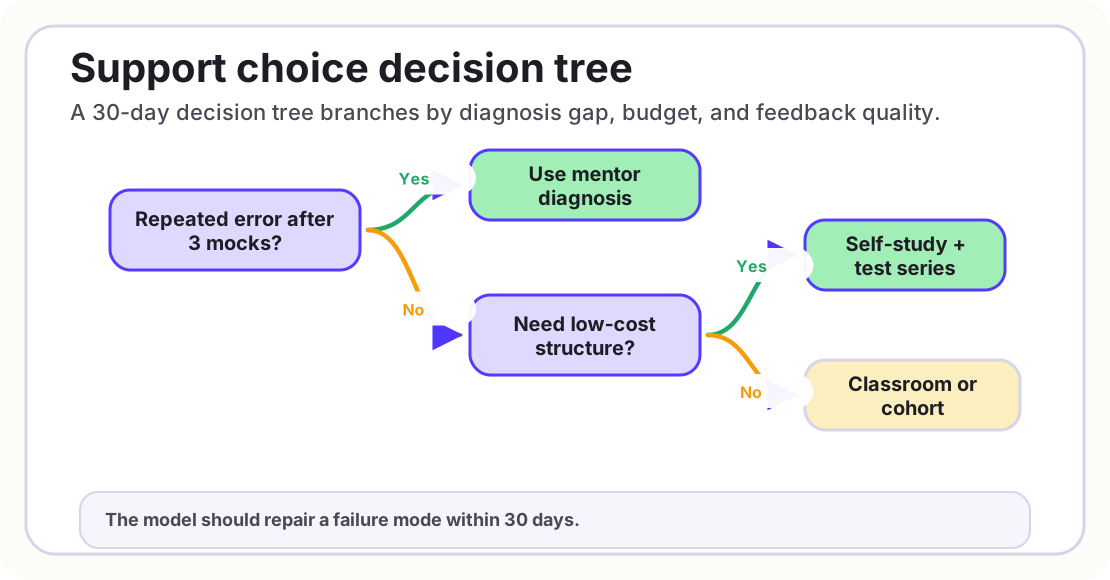
Use classroom support for syllabus pace, then add a private repair loop if mocks expose repeated errors. 4
Use this checkpoint before adding more unsorted practice or applications.
Mentorship solves diagnosis and accountability
Mentorship should change weekly decisions, not become another lecture stream. 5
Use this checkpoint before adding more unsorted practice or applications.
Cost should be compared to error cost
Compare support models by the number of weeks saved and the quality of correction produced. 6
Use this checkpoint before adding more unsorted practice or applications.
Choose one 30-day experiment
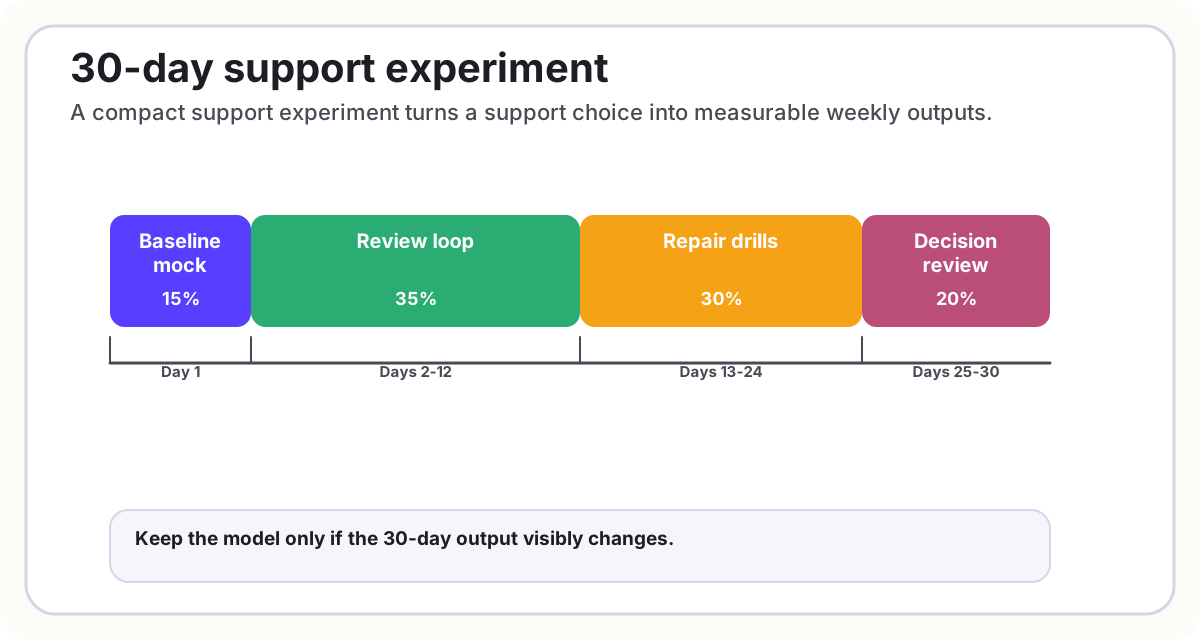
A 30-day support test is enough to see whether the model changes behaviour. 7
Use this checkpoint before adding more unsorted practice or applications.
FAQs
Is coaching necessary for CAT?
No. Coaching is useful when it creates structure or feedback that the student was not producing alone.
When should I choose mentorship over coaching?
Choose mentorship when the problem is diagnosis, accountability, or interview-story repair rather than first-time syllabus exposure.
Can I combine self-study and mentorship?
Yes. Many aspirants self-study content and use mentor reviews for mocks, section prioritisation, and WAT-PI readiness.
How long should I test a support model?
Use a 30-day experiment with measurable outputs before changing the support model.
What is the most common wrong choice?
The common wrong choice is buying more content when the real gap is review quality or decision discipline.
Conclusion
Choose CAT support by the failure mode it fixes, then test it for 30 days with measurable outputs. Start with the article's numeric anchor today and update it after your next mock or source check.
Related reading
References
- IIM CAT, "Common Admission Test official website," 2025. Available: https://iimcat.ac.in/ ↩
- IMS India, "CAT exam syllabus and pattern," 2026. Available: https://www.imsindia.com/blog/cat/cat-exam-syllabus/ ↩
- MBAUniverse, "CAT syllabus and exam pattern," 2026. Available: https://www.mbauniverse.com/cat/syllabus ↩
- Cracku, "CAT previous year papers and analysis," 2026. Available: https://cracku.in/cat-previous-papers ↩
- 2IIM, "CAT previous year question papers," 2026. Available: https://online.2iim.com/CAT-question-paper/ ↩
- J. Dunlosky et al., "Improving Students’ Learning With Effective Learning Techniques," Psychological Science in the Public Interest, 2013. Available: https://journals.sagepub.com/doi/10.1177/1529100612453266 ↩
- H. L. Roediger and J. D. Karpicke, "Test-enhanced learning," Psychological Science, 2006. Available: https://doi.org/10.1111/j.1467-9280.2006.01693.x ↩
- NCERT, "Mathematics Textbook for Class VIII," 2025. Available: https://ncert.nic.in/textbook.php?hemh1=0-13 ↩