Topic Guide
CAT preparation for working professionals
The working professional plan is not a smaller version of a full-time plan. It is a different plan. The constraint is not only hours; it is the quality of attention after a workday. A stable plan protects weekday maintenance, weekend deep work, and a review cadence that does not depend on leftover energy. The article treats energy as a measurable resource, not as a personality trait.
The realistic weekly hours
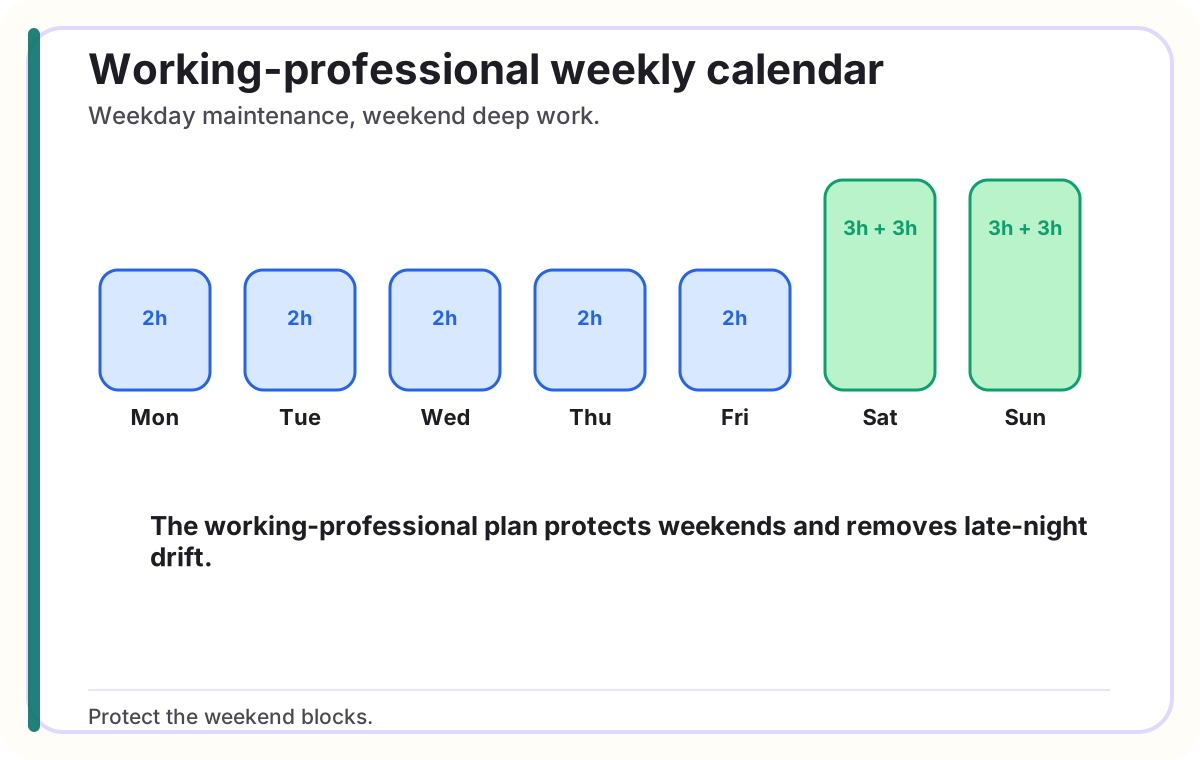
For most working professionals, a realistic week is 2 hours on weekdays and two 3-hour deep-work blocks on the weekend. That produces about 16 hours, but a 14-hour target leaves room for work spillover. Use the official CAT calendar for dates and your own workload for weekly planning 1, [2].
Track completed hours for 2 weeks before increasing the plan.
Treat the realistic weekly hours as a capacity decision, not a motivation decision. The official CAT site controls dates and registration facts; the plan controls training load 1. Write the planned hours, completed hours, and review hours in the same row every Sunday. If one of those three numbers is missing, the next week will repeat the same mistake with a cleaner calendar but weaker evidence.
The review routine should be narrower than the study routine. Pick one VARC behaviour, one DILR behaviour, and one QA behaviour to observe during the week. Examples: re-reading too often, abandoning DILR sets too late, or starting QA without a skip threshold. The plan becomes useful only when it changes a decision inside a timed session, not when it adds another topic name.
Use the mentor or peer check as an audit of evidence. Bring three items: last test score, two recurring error tags, and the hours actually completed. Do not ask whether the plan looks strong. Ask which one action should change before the next test. That keeps the realistic weekly hours tied to one correction and one measurable follow-up.
The operating rhythm is weekly, even when the article is monthly. Convert the realistic weekly hours into seven-day tasks: reading blocks, problem blocks, sectional review, and one protected recovery slot. A plan that cannot survive one normal week of college, office, travel, or family load will not survive the full season.
Morning versus night blocks
Many working aspirants plan a 9 PM block and then meet it with depleted attention. A morning block may be better for QA or DILR if the workday is mentally heavy. Do not rely on generic claims; run a 2-week self-test and compare accuracy.
The best block is the one with better solved-and-reviewed output.
Treat morning versus night blocks as a capacity decision, not a motivation decision. The official CAT site controls dates and registration facts; the plan controls training load 1. Write the planned hours, completed hours, and review hours in the same row every Sunday. If one of those three numbers is missing, the next week will repeat the same mistake with a cleaner calendar but weaker evidence.
The review routine should be narrower than the study routine. Pick one VARC behaviour, one DILR behaviour, and one QA behaviour to observe during the week. Examples: re-reading too often, abandoning DILR sets too late, or starting QA without a skip threshold. The plan becomes useful only when it changes a decision inside a timed session, not when it adds another topic name.
Use the mentor or peer check as an audit of evidence. Bring three items: last test score, two recurring error tags, and the hours actually completed. Do not ask whether the plan looks strong. Ask which one action should change before the next test. That keeps morning versus night blocks tied to one correction and one measurable follow-up.
The operating rhythm is weekly, even when the article is monthly. Convert morning versus night blocks into seven-day tasks: reading blocks, problem blocks, sectional review, and one protected recovery slot. A plan that cannot survive one normal week of college, office, travel, or family load will not survive the full season.
Weekend deep-work block
Put QA concept work, DILR sets, and mock review into the weekend. Keep weekday work for reading, formula recall, and smaller drills. Past papers should enter after the weekly load is stable [2], [3].
Protect the first 3-hour weekend block from errands if possible.
Treat weekend deep-work block as a capacity decision, not a motivation decision. The official CAT site controls dates and registration facts; the plan controls training load 1. Write the planned hours, completed hours, and review hours in the same row every Sunday. If one of those three numbers is missing, the next week will repeat the same mistake with a cleaner calendar but weaker evidence.
The review routine should be narrower than the study routine. Pick one VARC behaviour, one DILR behaviour, and one QA behaviour to observe during the week. Examples: re-reading too often, abandoning DILR sets too late, or starting QA without a skip threshold. The plan becomes useful only when it changes a decision inside a timed session, not when it adds another topic name.
Use the mentor or peer check as an audit of evidence. Bring three items: last test score, two recurring error tags, and the hours actually completed. Do not ask whether the plan looks strong. Ask which one action should change before the next test. That keeps weekend deep-work block tied to one correction and one measurable follow-up.
The operating rhythm is weekly, even when the article is monthly. Convert weekend deep-work block into seven-day tasks: reading blocks, problem blocks, sectional review, and one protected recovery slot. A plan that cannot survive one normal week of college, office, travel, or family load will not survive the full season.
Mentor-call cadence
Bring three data points to the mentor call: hours completed, top errors, and next drills. A working professional does not need more advice; they need fewer unresolved decisions.
End the call with the next week written in time blocks.
Treat mentor-call cadence as a capacity decision, not a motivation decision. The official CAT site controls dates and registration facts; the plan controls training load 1. Write the planned hours, completed hours, and review hours in the same row every Sunday. If one of those three numbers is missing, the next week will repeat the same mistake with a cleaner calendar but weaker evidence.
The review routine should be narrower than the study routine. Pick one VARC behaviour, one DILR behaviour, and one QA behaviour to observe during the week. Examples: re-reading too often, abandoning DILR sets too late, or starting QA without a skip threshold. The plan becomes useful only when it changes a decision inside a timed session, not when it adds another topic name.
Use the mentor or peer check as an audit of evidence. Bring three items: last test score, two recurring error tags, and the hours actually completed. Do not ask whether the plan looks strong. Ask which one action should change before the next test. That keeps mentor-call cadence tied to one correction and one measurable follow-up.
Mock schedule
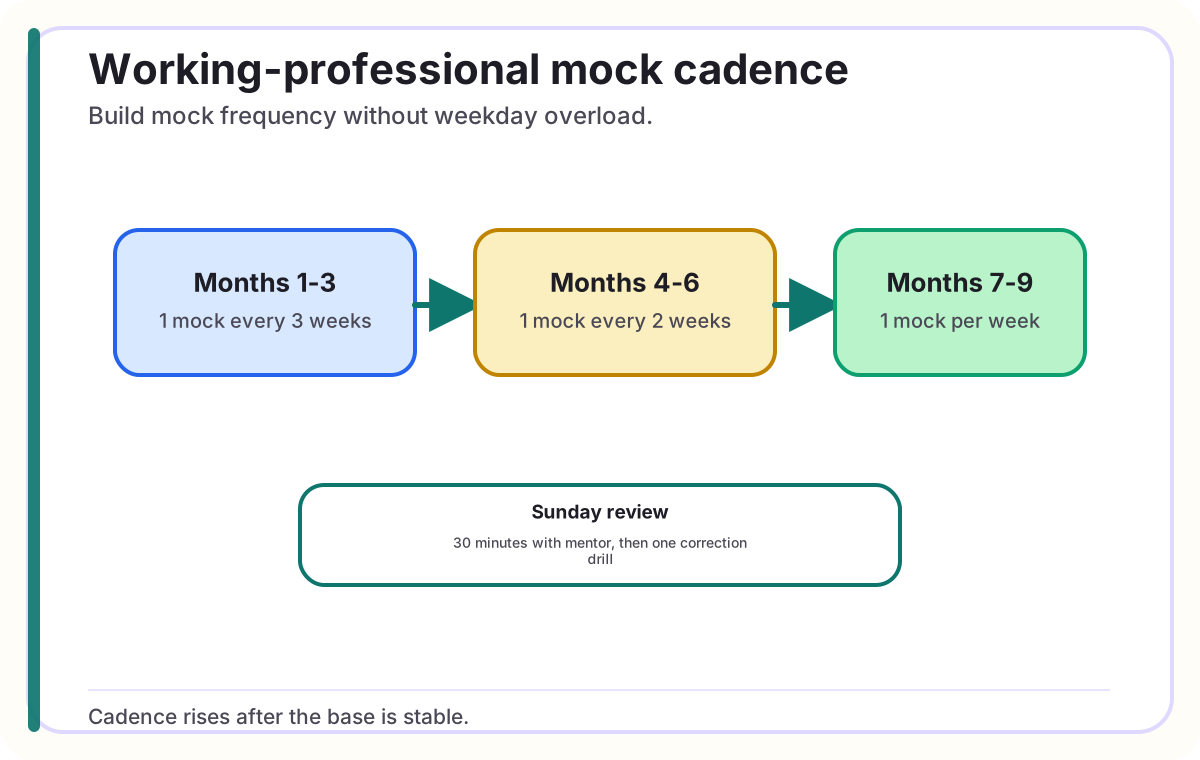
Use one mock every 3 weeks early, one every 2 weeks in the middle, and weekly mocks once the base is stable. Exam-pattern pages provide the annual structure, but the cadence should be governed by review completion [6], [7].
Never add a mock to a week that still has an unreviewed mock.
Treat mock schedule as a capacity decision, not a motivation decision. The official CAT site controls dates and registration facts; the plan controls training load 1. Write the planned hours, completed hours, and review hours in the same row every Sunday. If one of those three numbers is missing, the next week will repeat the same mistake with a cleaner calendar but weaker evidence.
The review routine should be narrower than the study routine. Pick one VARC behaviour, one DILR behaviour, and one QA behaviour to observe during the week. Examples: re-reading too often, abandoning DILR sets too late, or starting QA without a skip threshold. The plan becomes useful only when it changes a decision inside a timed session, not when it adds another topic name.
Use the mentor or peer check as an audit of evidence. Bring three items: last test score, two recurring error tags, and the hours actually completed. Do not ask whether the plan looks strong. Ask which one action should change before the next test. That keeps mock schedule tied to one correction and one measurable follow-up.
What to do this weekend
Put Saturday and Sunday deep-work windows on the calendar. Then choose the weekday block you will test for 2 weeks.
Your target is 2 protected weekend blocks before Monday.
Treat what to do this weekend as a capacity decision, not a motivation decision. The official CAT site controls dates and registration facts; the plan controls training load 1. Write the planned hours, completed hours, and review hours in the same row every Sunday. If one of those three numbers is missing, the next week will repeat the same mistake with a cleaner calendar but weaker evidence.
The review routine should be narrower than the study routine. Pick one VARC behaviour, one DILR behaviour, and one QA behaviour to observe during the week. Examples: re-reading too often, abandoning DILR sets too late, or starting QA without a skip threshold. The plan becomes useful only when it changes a decision inside a timed session, not when it adds another topic name.
Use the mentor or peer check as an audit of evidence. Bring three items: last test score, two recurring error tags, and the hours actually completed. Do not ask whether the plan looks strong. Ask which one action should change before the next test. That keeps what to do this weekend tied to one correction and one measurable follow-up.
FAQs
Can I prepare for CAT while working full time?
Yes, if the plan is built around weekday maintenance, weekend deep work, and consistent review.
How many hours should a working professional study for CAT?
Start around 14 hours per week and increase only after the schedule is stable.
Should I study before or after work?
Test both for 2 weeks if possible. Keep the block that produces better accuracy and review completion.
How often should working professionals take mocks?
Start with one mock every 3 weeks, then move to every 2 weeks and weekly only when review time is available.
Is mentorship useful for working professionals?
Mentorship helps when it turns limited time into specific decisions: what to study, what to cut, and what to review next.
Conclusion
Choose the next 7 days, not the full season. Put the hours or mocks on the calendar, then review what actually happened before you expand the plan.
Related reading
References
- Indian Institutes of Management, "Common Admission Test official website," 2025. [Online]. Available: https://iimcat.ac.in/ [2] The Economic Times, "CAT 2025 Notification Released: Registration begins August 1 at iimcat.ac.in," 2025. [Online]. Available: https://economictimes.indiatimes.com/news/new-updates/cat-2025-notification-released-at-iimcat-ac-in-exam-on-november-30-registrations-begin-august-1-at-iimcat-ac-in/articleshow/122932378.cms [3] 2IIM, "CAT previous year question papers," 2025. [Online]. Available: https://online.2iim.com/CAT-question-paper/ [4] Cracku, "CAT previous papers," 2025. [Online]. Available: https://cracku.in/cat-previous-papers [5] IMS India, "CAT syllabus and preparation guide," 2025. [Online]. Available: https://www.imsindia.com/blog/cat/cat-syllabus/ [6] MBAUniverse, "CAT syllabus and exam pattern," 2025. [Online]. Available: https://www.mbauniverse.com/articles/cat-syllabus [7] Career Launcher, "CAT exam pattern," 2025. [Online]. Available: https://www.careerlauncher.com/cat-mba/exam-pattern/ [8] Shiksha, "CAT exam pattern," 2025. [Online]. Available: https://www.shiksha.com/mba/cat-exam-pattern ↩