Topic Guide
When to start CAT preparation: the gap-based rule
The right time to start CAT preparation is not always as early as possible. It is the point where your target-minus-baseline gap becomes larger than the months you have. A student already scoring high in sectionals needs a different calendar from a student rebuilding arithmetic and reading stamina. Start with the gap.
The gap-based rule
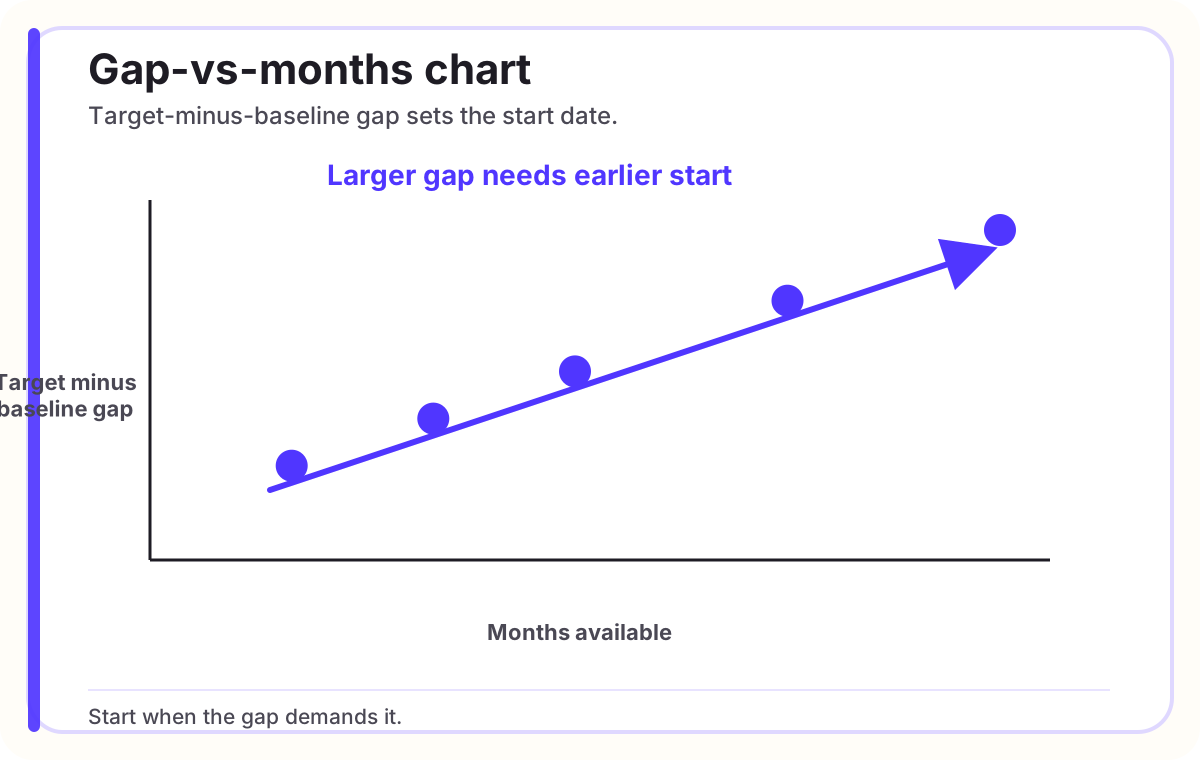
Take a baseline mock, pick a target band, and compute the gap. A small gap can use a refinement plan. A large gap needs a longer skill-building route. Past-paper and pattern sources help you understand the test shape, but the start date should come from your own baseline [2], [3], [6].
Use the gap as a planning signal, not as a self-worth score.
This section should be read against the baseline, not against ambition. For the gap-based rule, the operative number is the gap between current performance and target performance. A short plan can work only when that gap is already narrow enough to repair with mocks, sectionals, and error reduction. If the baseline is unstable, spend the next week stabilising measurement before changing the calendar.
Use a two-score rule before drawing conclusions. One mock can be noisy, so compare the latest score with the previous two attempts and the section-level split. The decision is not whether the student feels ready; it is whether the weakest section has enough headroom to survive sectional timing.
Translate the decision into one written gate. For the gap-based rule, the gate should contain a number, a date, and a consequence. If the number is missed, the plan changes; if it is hit, the next block continues. This removes negotiation from the middle of a stressful week.
How to take a baseline
A baseline is valid only if the mock was timed, uninterrupted, and analysed. Note sectional percentiles, not only overall. A lopsided score can hide a weak section that will later hit an IIM screening gate 1.
Write the weakest section and the widest error category before choosing a plan.
This section should be read against the baseline, not against ambition. For how to take a baseline, the operative number is the gap between current performance and target performance. A short plan can work only when that gap is already narrow enough to repair with mocks, sectionals, and error reduction. If the baseline is unstable, spend the next week stabilising measurement before changing the calendar.
Use a two-score rule before drawing conclusions. One mock can be noisy, so compare the latest score with the previous two attempts and the section-level split. The decision is not whether the student feels ready; it is whether the weakest section has enough headroom to survive sectional timing.
How much time different gaps need
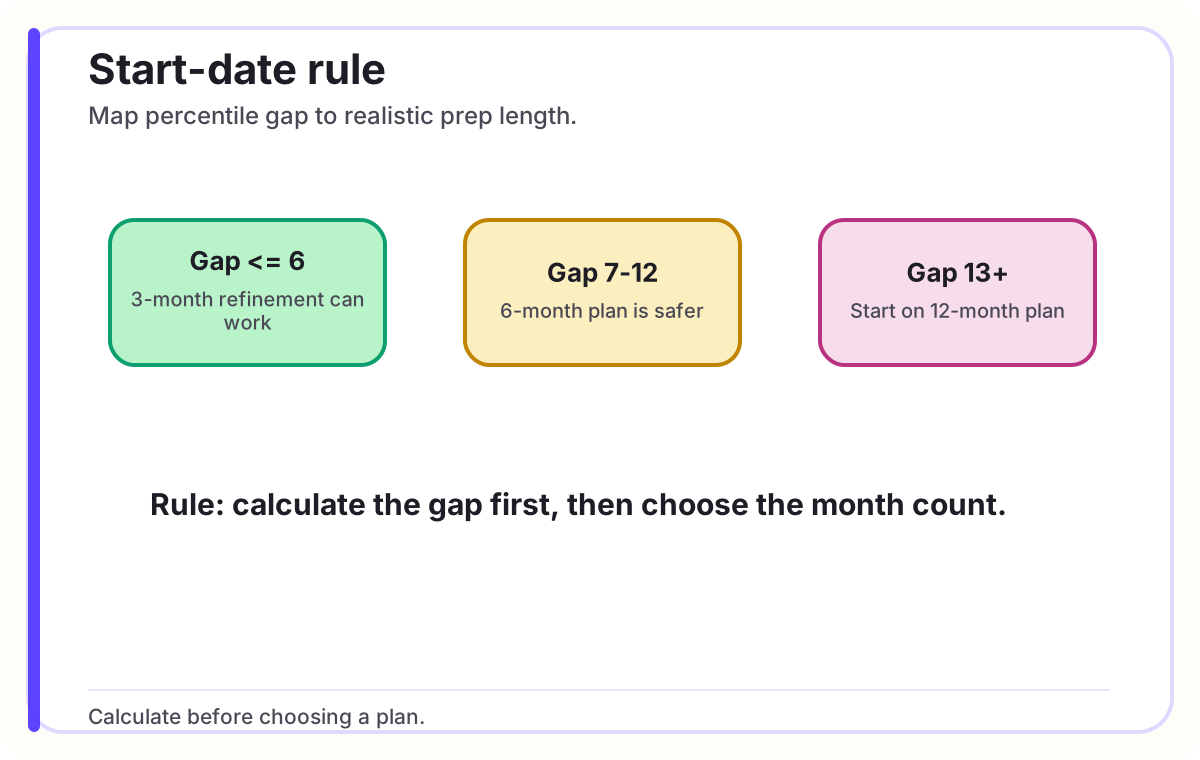
As a planning rule, a small gap can fit 3 months, a medium gap may need 6 months, and a large gap should use 9 to 12 months. This is not a guarantee. It is a conservative way to avoid compressing skill-building into a mock-heavy schedule.
Choose the longer plan when work, college, or travel reduces weekly hours.
This section should be read against the baseline, not against ambition. For how much time different gaps need, the operative number is the gap between current performance and target performance. A short plan can work only when that gap is already narrow enough to repair with mocks, sectionals, and error reduction. If the baseline is unstable, spend the next week stabilising measurement before changing the calendar.
Use a two-score rule before drawing conclusions. One mock can be noisy, so compare the latest score with the previous two attempts and the section-level split. The decision is not whether the student feels ready; it is whether the weakest section has enough headroom to survive sectional timing.
When starting too early hurts
Starting early helps only if the plan has phases. A 12-month plan without checkpoints becomes loose practice. Use scheduled reviews every 3 months to protect direction.
Early start is useful when it builds skill, not when it produces inactive notes.
This section should be read against the baseline, not against ambition. For when starting too early hurts, the operative number is the gap between current performance and target performance. A short plan can work only when that gap is already narrow enough to repair with mocks, sectionals, and error reduction. If the baseline is unstable, spend the next week stabilising measurement before changing the calendar.
Use a two-score rule before drawing conclusions. One mock can be noisy, so compare the latest score with the previous two attempts and the section-level split. The decision is not whether the student feels ready; it is whether the weakest section has enough headroom to survive sectional timing.
When starting too late hurts
Late starts often remove analysis from the plan. Students keep taking mocks but do not repair the errors. Syllabus and exam-pattern pages can tell you what exists; they cannot create the missing review hours [4], [5], [7].
If review time does not fit, the plan is too compressed.
This section should be read against the baseline, not against ambition. For when starting too late hurts, the operative number is the gap between current performance and target performance. A short plan can work only when that gap is already narrow enough to repair with mocks, sectionals, and error reduction. If the baseline is unstable, spend the next week stabilising measurement before changing the calendar.
Use a two-score rule before drawing conclusions. One mock can be noisy, so compare the latest score with the previous two attempts and the section-level split. The decision is not whether the student feels ready; it is whether the weakest section has enough headroom to survive sectional timing.
What to do this week
Take one baseline mock this week. Subtract the baseline from the target band. Then choose 3, 6, 9, or 12 months based on the gap and weekly hours.
Your first output is one number: the gap.
This section should be read against the baseline, not against ambition. For what to do this week, the operative number is the gap between current performance and target performance. A short plan can work only when that gap is already narrow enough to repair with mocks, sectionals, and error reduction. If the baseline is unstable, spend the next week stabilising measurement before changing the calendar.
Use a two-score rule before drawing conclusions. One mock can be noisy, so compare the latest score with the previous two attempts and the section-level split. The decision is not whether the student feels ready; it is whether the weakest section has enough headroom to survive sectional timing.
FAQs
When should I start preparing for CAT?
Start when your target-minus-baseline gap needs more months than you currently have. Take a baseline mock before deciding.
Is one year too early for CAT preparation?
One year is useful if it is phased into skill, mock, and refinement blocks. It can be wasteful without checkpoints.
Can I start CAT preparation 3 months before the exam?
Only if your baseline is already strong. A beginner should avoid treating 3 months as a full-prep plan.
How do I know my baseline?
Take a timed full mock and analyse sectional scores and error types.
What if I work full time?
Choose a longer timeline when your weekday hours are limited. Weekly availability matters as much as calendar months.
Conclusion
Choose the next 7 days, not the full season. Put the hours or mocks on the calendar, then review what actually happened before you expand the plan.
Related reading
References
- Indian Institutes of Management, "Common Admission Test official website," 2025. [Online]. Available: https://iimcat.ac.in/ [2] The Economic Times, "CAT 2025 Notification Released: Registration begins August 1 at iimcat.ac.in," 2025. [Online]. Available: https://economictimes.indiatimes.com/news/new-updates/cat-2025-notification-released-at-iimcat-ac-in-exam-on-november-30-registrations-begin-august-1-at-iimcat-ac-in/articleshow/122932378.cms [3] 2IIM, "CAT previous year question papers," 2025. [Online]. Available: https://online.2iim.com/CAT-question-paper/ [4] Cracku, "CAT previous papers," 2025. [Online]. Available: https://cracku.in/cat-previous-papers [5] IMS India, "CAT syllabus and preparation guide," 2025. [Online]. Available: https://www.imsindia.com/blog/cat/cat-syllabus/ [6] MBAUniverse, "CAT syllabus and exam pattern," 2025. [Online]. Available: https://www.mbauniverse.com/articles/cat-syllabus [7] Career Launcher, "CAT exam pattern," 2025. [Online]. Available: https://www.careerlauncher.com/cat-mba/exam-pattern/ [8] Shiksha, "CAT exam pattern," 2025. [Online]. Available: https://www.shiksha.com/mba/cat-exam-pattern ↩