Topic Guide
DI Caselets: The Reading-First Strategy for CAT 2026
Most DI caselet errors begin before the first calculation. The student reads a percentage as a count, compares two different bases, or misses the exception line. A reading-first strategy is not slower; it prevents 6 minutes of correct arithmetic on the wrong denominator.
Read labels first - 4 signals before calculation
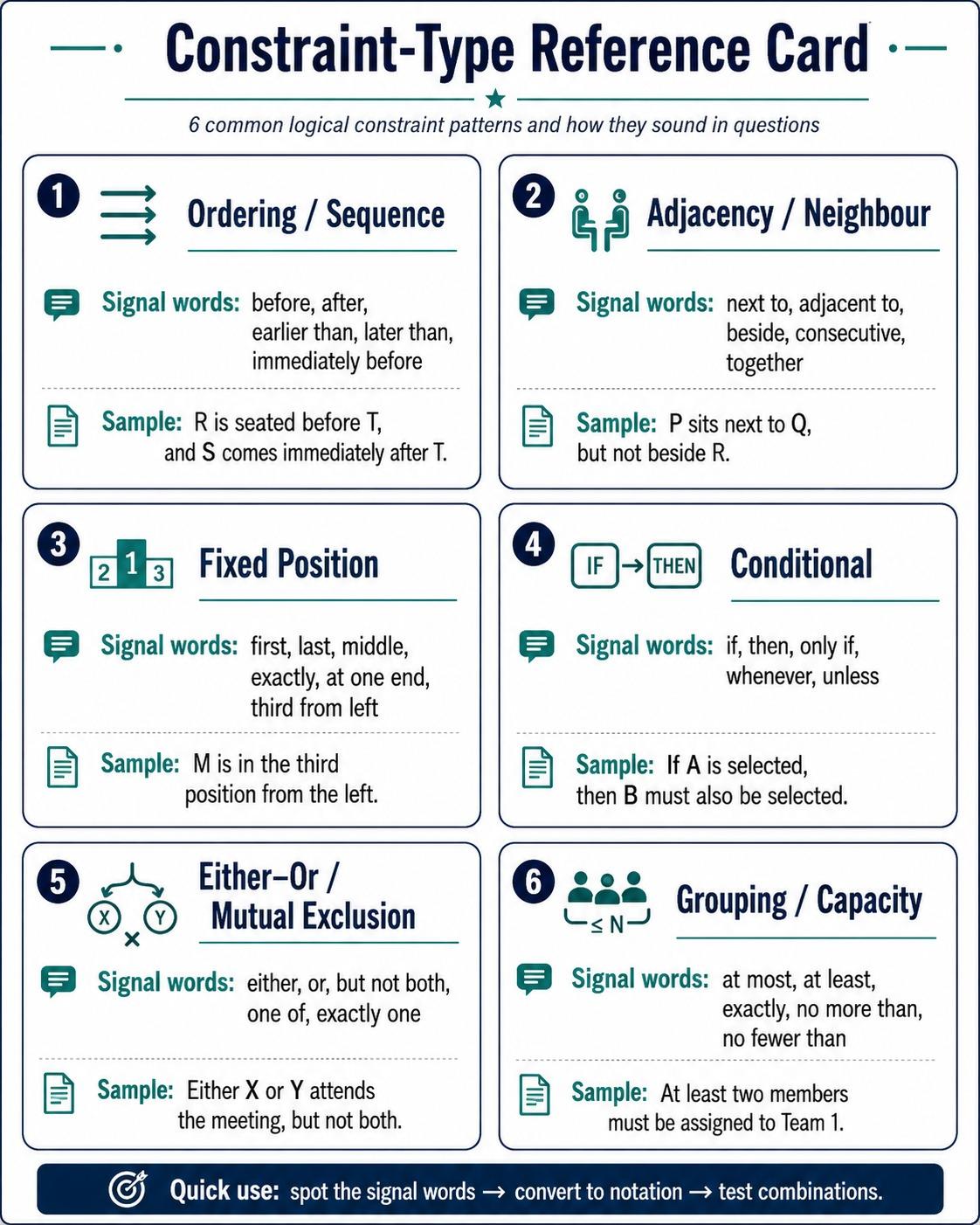
Before writing numbers, mark unit, base, time order, and exception. If the caselet says percentage of total sales, your base is total sales, not product sales. If it says excluding exports, the missing category is part of the interpretation. This is where many wrong answers are created.
Build the mini-table - 1 structure, then arithmetic
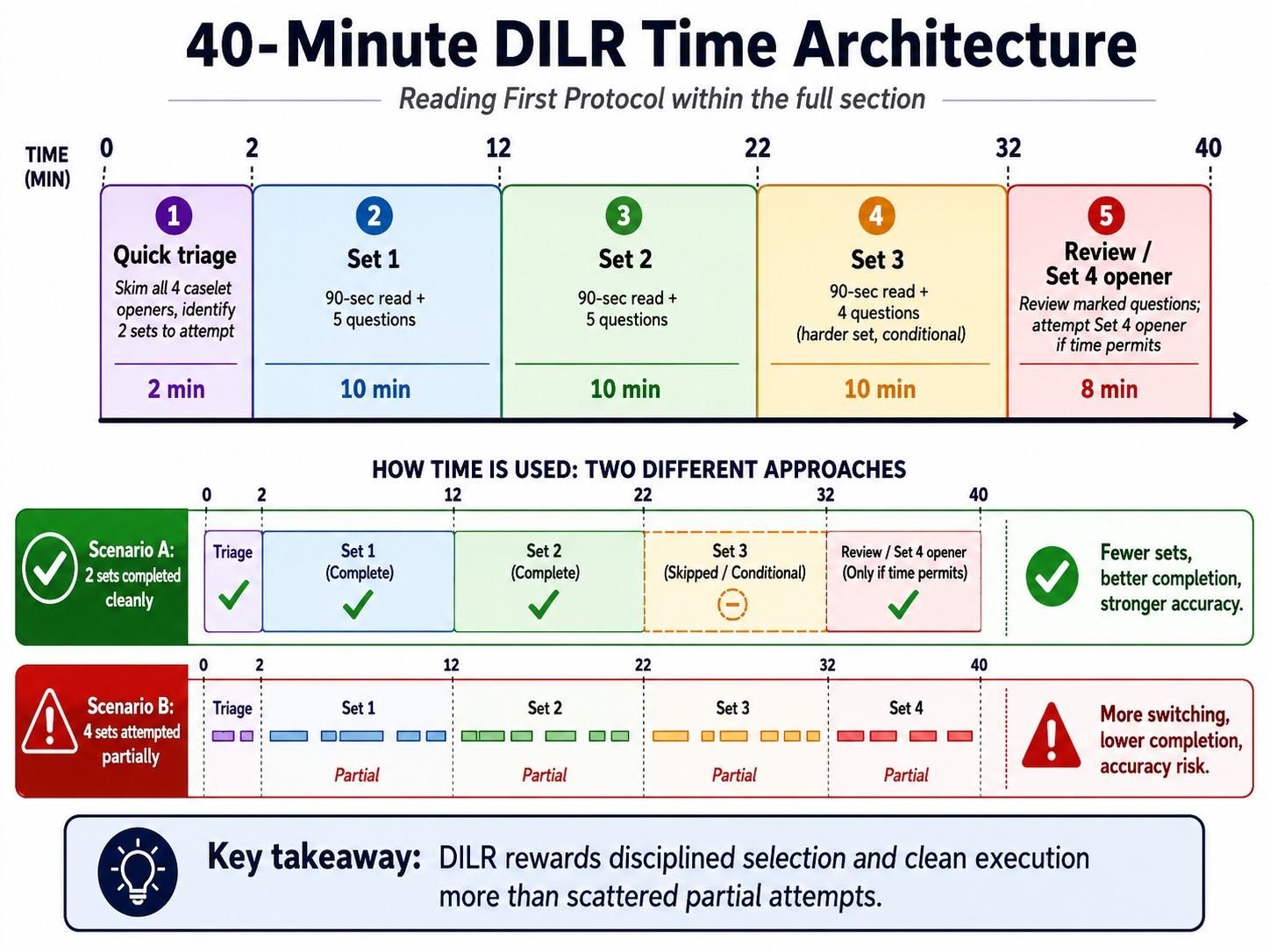
Every DI caselet should become a mini-table with row labels, column labels, and one blank for each unknown. Do not carry long calculations in the margin. The table is the working memory. Once the structure is right, calculations become routine.
Use approximation only after the base is safe
Approximation is useful for answer elimination when options are far apart. It is dangerous when the base is unclear. First confirm whether the question asks for absolute difference, percentage change, share of total, or ratio. Then decide whether an approximate calculation is enough.
| Question phrase | Operation | Trap |
|---|---|---|
| Percentage increase | (new-old)/old | Using new as base |
| Share of total | part/total | Using category total |
| Ratio | A:B | Comparing percentages |
| Average | sum/count | Wrong count |
Review wrong answers - separate reading errors from math errors
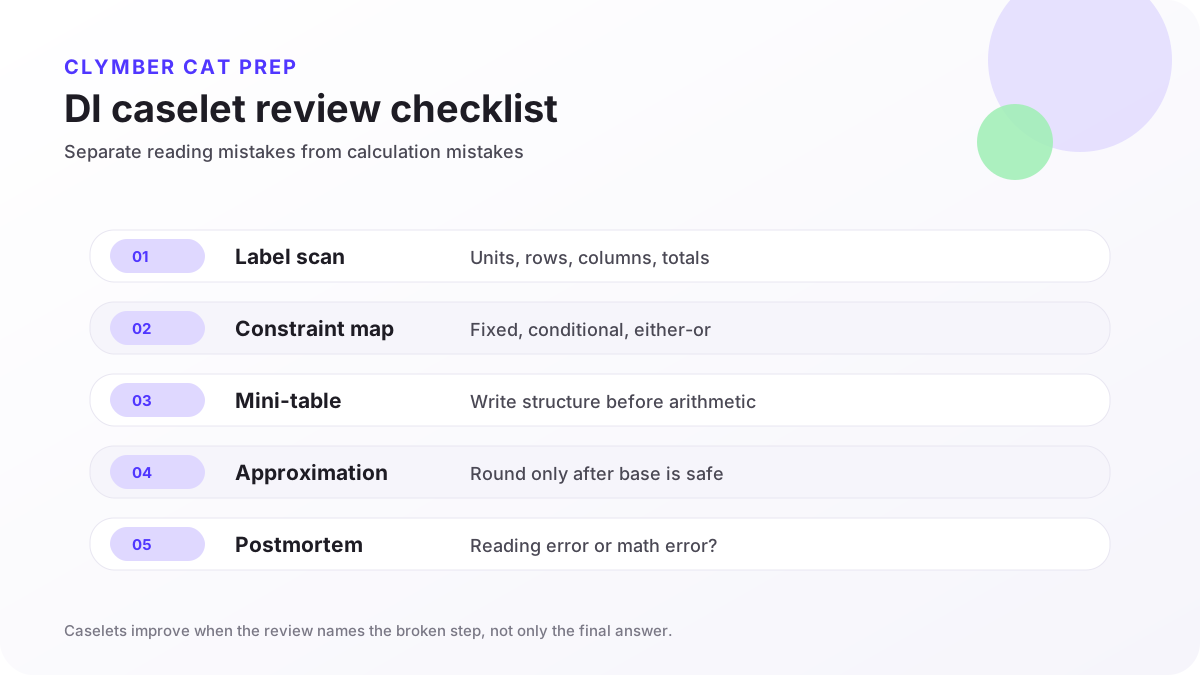
After a sectional, do not mark every wrong answer as calculation. Label each error as unit, base, missing constraint, arithmetic, or late exit. If 60% of errors are reading errors, extra formula practice will not solve the problem.
FAQs
Should I read the whole DI caselet before calculating?
Yes. Read enough to identify unit, base, time order, and exceptions before the first calculation.
When should I approximate in DI?
Approximate after the base and operation are clear, especially when options are far apart.
How do I reduce silly mistakes in DI?
Replace the phrase silly mistake with a cause label: unit, base, constraint, arithmetic, or exit timing.
Conclusion
In the next 7 days, solve 10 DI caselets using the same four-signal checklist. Your target is 10 completed constraint cards before increasing caselet volume.
Related reading
- complete DILR strategy
- caselet definition
- mock-test playbook
References
- Indian Institutes of Management, "CAT official website," 2025. [Online]. Available: https://iimcat.ac.in/. Accessed: Jun. 14, 2026. ↩
- 2IIM, "CAT previous-year question papers," 2025. [Online]. Available: https://online.2iim.com/CAT-question-paper/. Accessed: Jun. 14, 2026. ↩
- InsideIIM, "CAT preparation and admission analysis," 2025. [Online]. Available: https://insideiim.com/. Accessed: Jun. 14, 2026. ↩
- 2IIM, "CAT score calculator and score-vs-percentile estimates," 2025. [Online]. Available: https://online.2iim.com/CAT-question-paper/. Accessed: Jun. 14, 2026. ↩
- Cracku, "CAT score calculator," 2025. [Online]. Available: https://cracku.in/cat-score-calculator/. Accessed: Jun. 14, 2026. ↩
- Career Launcher, "CAT marks vs percentile," 2025. [Online]. Available: https://www.careerlauncher.com/cat-mba/cat-marks-vs-percentile/. Accessed: Jun. 14, 2026. ↩
- Times of India Education, "CAT 2025 exam pattern and strategy reporting," 2025. [Online]. Available: https://timesofindia.indiatimes.com/education/news. Accessed: Jun. 14, 2026. ↩
- MBAUniverse, "CAT score vs percentile analysis," 2025. [Online]. Available: https://www.mbauniverse.com/articles/cat-score-vs-percentile. Accessed: Jun. 14, 2026. ↩
- IMS India, "CAT analysis and preparation resources," 2025. [Online]. Available: https://www.imsindia.com/blog/cat/. Accessed: Jun. 14, 2026. ↩
- Career Launcher, "CAT preparation resources," 2025. [Online]. Available: https://www.careerlauncher.com/cat-mba/. Accessed: Jun. 14, 2026. ↩
- National Institutional Ranking Framework, Ministry of Education, "India Rankings 2025: Management," 2025. [Online]. Available: https://www.nirfindia.org/Rankings/2025/ManagementRanking.html. Accessed: Jun. 14, 2026. ↩