Quick Read
The last 30 days before CAT: the consolidation playbook
The last 30 days before CAT are for consolidation, not expansion. A student who adds new topics in the final month often creates more uncertainty than score gain. The better play is fewer mocks than the previous month, stronger review, and stable exam-day decisions. This guide gives you a final-month calendar.
The mock taper
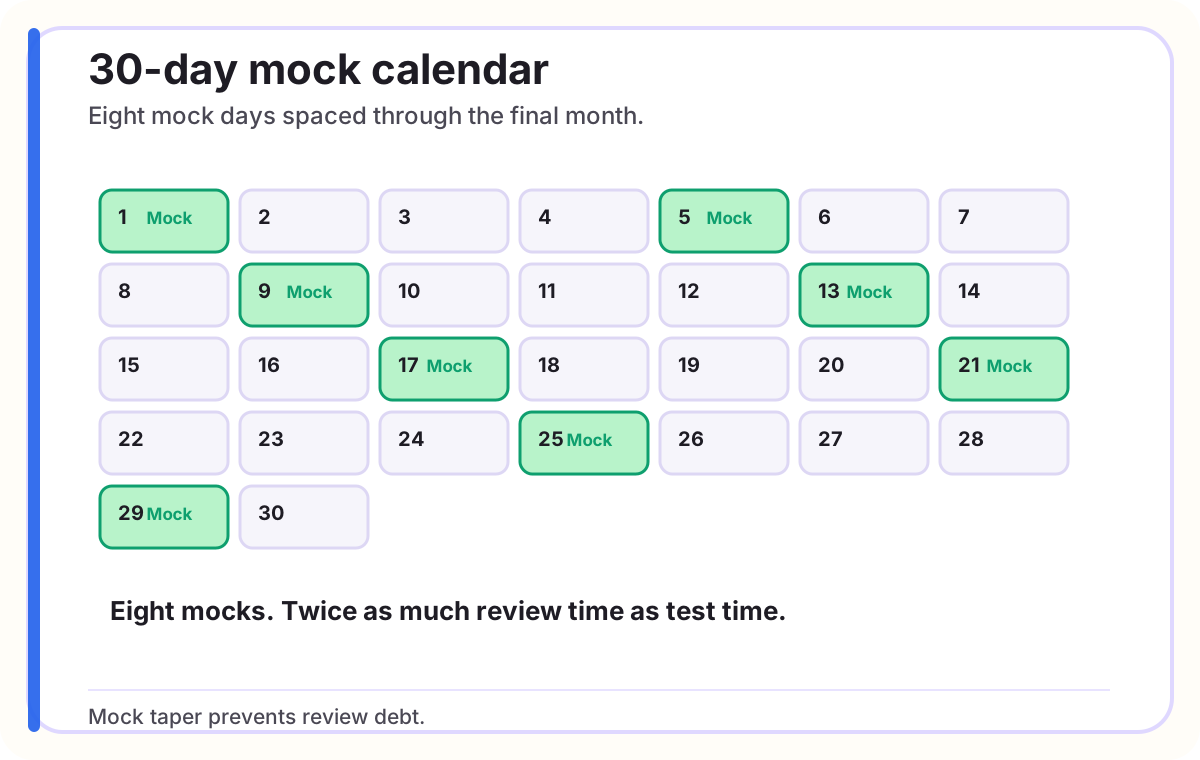
Eight mocks give you enough signal without creating review debt. Space them across the month so each one gets a review block. The official CAT site remains the format authority; the calendar here is a preparation structure 1.
Treat each mock as a data source, not a mood event.
The final month should reduce decision count. For the mock taper, pre-write the rule before the next mock: when to skip, when to review, and when to stop revising a topic. This protects review time, which is the only part of a mock that can change the next score. Keep the evidence from the last 3 tests visible while making this call [2], [3].
The 2:1 review ratio
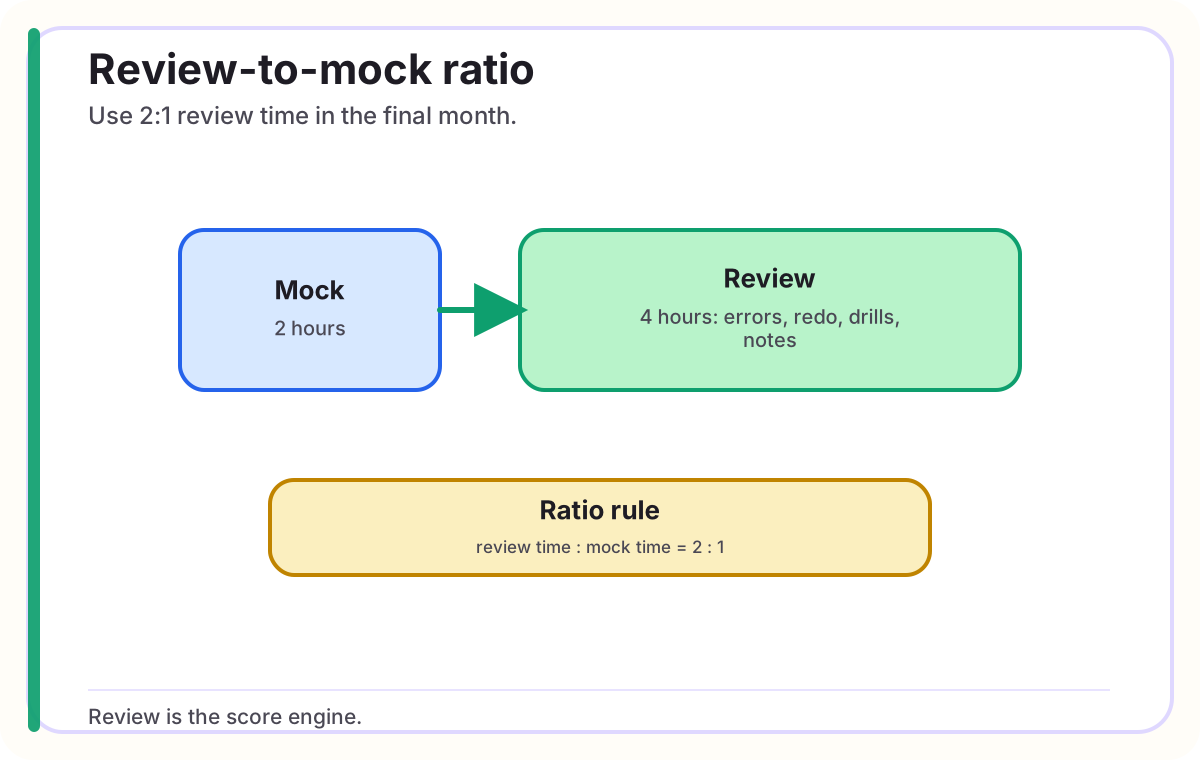
A 2-hour mock should create about 4 hours of review: error category, redo, alternate solution, and one drill. Past-paper sources help you compare solutions, but the score lift comes from closing the repeated error [2], [3].
If you cannot review a mock, do not add another mock.
The final month should reduce decision count. For the 2:1 review ratio, pre-write the rule before the next mock: when to skip, when to review, and when to stop revising a topic. This protects review time, which is the only part of a mock that can change the next score. Keep the evidence from the last 3 tests visible while making this call [2], [3].
The do-not-do list
Do not start a new test series. Do not add rare QA topics. Do not change section order after one weak mock. Do not study from unreviewed solution dumps. These behaviours feel active but reduce control.
Use the final month to reduce variance.
The final month should reduce decision count. For the do-not-do list, pre-write the rule before the next mock: when to skip, when to review, and when to stop revising a topic. This protects review time, which is the only part of a mock that can change the next score. Keep the evidence from the last 3 tests visible while making this call [2], [3].
What to keep
Keep short formula checks, one weak-section drill, and consistent mock timing. If the exam is expected in the standard sectional format, protect 40-minute section stamina and skip rules [6], [7].
The final month is about repetition under realistic constraints.
The final month should reduce decision count. For what to keep, pre-write the rule before the next mock: when to skip, when to review, and when to stop revising a topic. This protects review time, which is the only part of a mock that can change the next score. Keep the evidence from the last 3 tests visible while making this call [2], [3].
Mentor or peer review
A mentor or serious peer can see drift that you normalise. Bring the same three items every week: last mock score, top five errors, and next three drills.
The meeting should change the next week, not become a motivational conversation.
The final month should reduce decision count. For mentor or peer review, pre-write the rule before the next mock: when to skip, when to review, and when to stop revising a topic. This protects review time, which is the only part of a mock that can change the next score. Keep the evidence from the last 3 tests visible while making this call [2], [3].
What to do tonight
Open a 30-day calendar and mark 8 mock days. Then add review blocks immediately after them. Do not leave review to unused time.
Your target is 8 mock days and 16 review blocks.
FAQs
How many mocks should I take in the last 30 days before CAT?
Eight well-reviewed mocks are a strong final-month target for most students.
Should I start new topics in the last month?
Usually no. Use the final month for consolidation, review, formula recall, and stable exam-day decisions.
What is the ideal mock review time?
Use a 2:1 ratio. For a 2-hour mock, spend about 4 hours on review and repair.
Can I change my section strategy in the final month?
Change only if repeated evidence supports it. Do not change strategy after one bad mock.
What should I do the night I make the plan?
Mark the mock days and review blocks first. The calendar should show analysis time, not only tests.
Conclusion
Choose the next 7 days, not the full season. Put the hours or mocks on the calendar, then review what actually happened before you expand the plan.
Related reading
References
- Indian Institutes of Management, "Common Admission Test official website," 2025. [Online]. Available: https://iimcat.ac.in/ [2] The Economic Times, "CAT 2025 Notification Released: Registration begins August 1 at iimcat.ac.in," 2025. [Online]. Available: https://economictimes.indiatimes.com/news/new-updates/cat-2025-notification-released-at-iimcat-ac-in-exam-on-november-30-registrations-begin-august-1-at-iimcat-ac-in/articleshow/122932378.cms [3] 2IIM, "CAT previous year question papers," 2025. [Online]. Available: https://online.2iim.com/CAT-question-paper/ [4] Cracku, "CAT previous papers," 2025. [Online]. Available: https://cracku.in/cat-previous-papers [5] IMS India, "CAT syllabus and preparation guide," 2025. [Online]. Available: https://www.imsindia.com/blog/cat/cat-syllabus/ [6] MBAUniverse, "CAT syllabus and exam pattern," 2025. [Online]. Available: https://www.mbauniverse.com/articles/cat-syllabus [7] Career Launcher, "CAT exam pattern," 2025. [Online]. Available: https://www.careerlauncher.com/cat-mba/exam-pattern/ [8] Shiksha, "CAT exam pattern," 2025. [Online]. Available: https://www.shiksha.com/mba/cat-exam-pattern ↩