IIM Cutoffs
IIM Bangalore cutoffs and shortlist criteria
IIM Bangalore should be read through its own admission policy, not through a generic IIM cutoff table. The useful view has four gates: three section gates and one overall gate. After that, the composite score decides how the profile, CAT score, and interview stage interact.
The cutoff
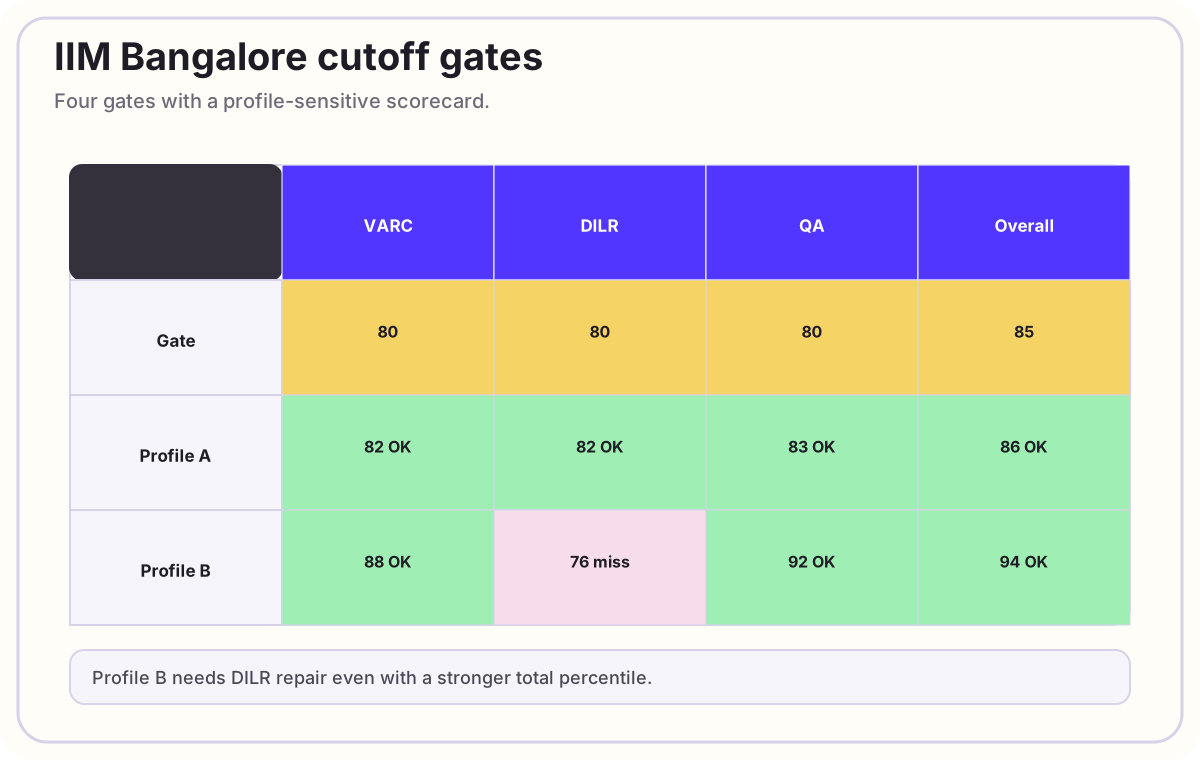
For IIM Bangalore, the section gates matter because an overall percentile can hide a weak section. The exact numbers should be pulled from the official admission policy for the current cycle before publication. In the student-facing shortlist sheet, place the current cycle and source date next to the values.
The four-gate view prevents the most common error: calling a candidate safe because the total percentile is high while one section is below the published minimum.
The selection stages
The first stage identifies candidates for the interview process. The second stage evaluates WAT or interview components depending on the institute. The final stage mixes CAT, profile, and interview-stage score by the published formula.
A candidate preparing for IIM Bangalore should write down the formula before deciding whether the institute is profile-friendly or CAT-heavy.
Composite-score weights
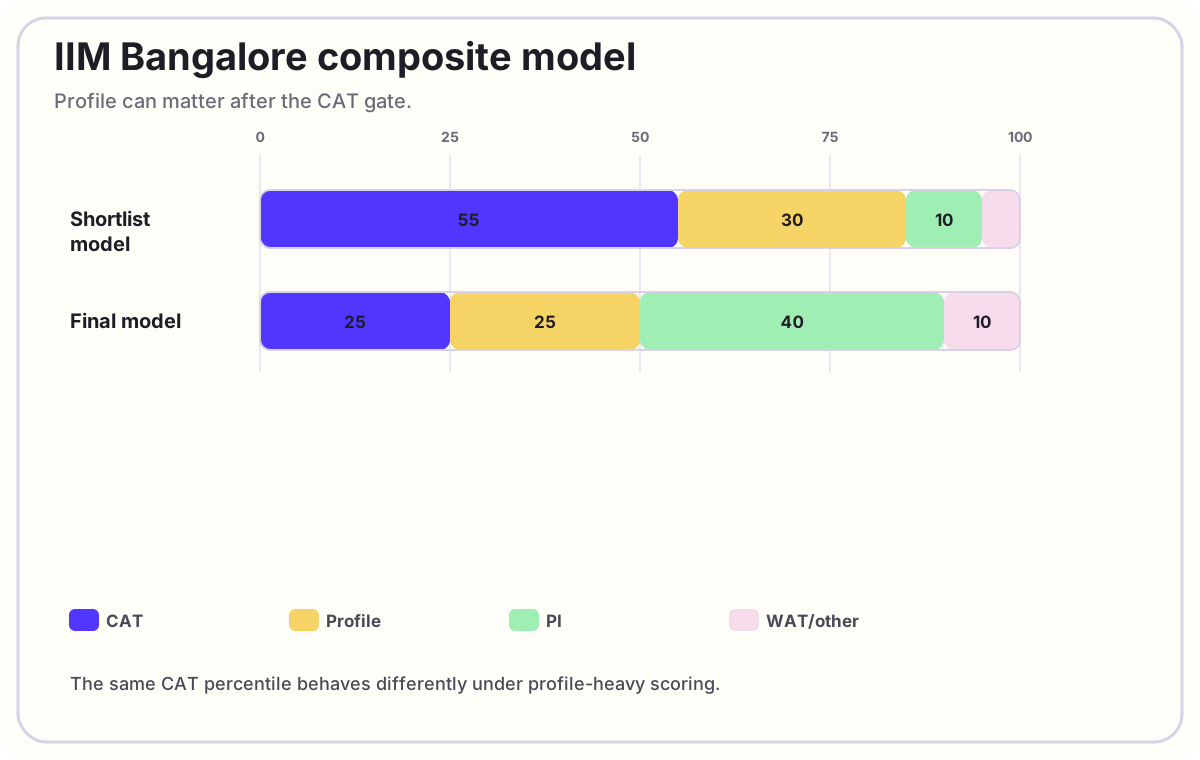
The composite score decides how much weight CAT carries relative to academics, work experience, diversity, WAT, and PI. IIM Bangalore's policy should be compared with IIM Ahmedabad, Bangalore, Calcutta, Lucknow, and Kozhikode as a set.
This comparison is useful because candidates are not identical. A strong work-experience profile and a strong CAT-only profile may prefer different target mixes.
Category-wise reading
Reserved-category and PwD gates can differ substantially from General-category gates. Do not estimate them from a coaching table if the institute policy is available. In a production page, show the source date and link the PDF or admissions page directly.
For students, the rule is to compare only within the correct category row. Cross-category comparison is not an admission strategy.
Fee and placement context
Fee and placement numbers are useful for decision-making, but they change and should not be mixed with the admission cutoff. Keep them in a separate context section and cite the official or current placement source.
For IIM Bangalore, the cutoff page should help a candidate decide whether to target the campus. It should not overstate ROI from a single placement headline.
How to use this page
A student should not read IIM Bangalore in isolation. Compare it with two adjacent campuses on three fields: section gates, composite weights, and interview-stage weight.
That comparison shows whether the institute fits the student's current score and profile. It also turns the next mock into a targeted diagnostic.
How to read the official policy page
Start with the programme and batch year. Then identify the category, section minima, overall percentile, shortlist formula, and final selection formula. The page may place these items in different sections, so copy them into one sheet before interpreting the result [2].
The most common error is to copy the overall gate and miss the composite score. A candidate who clears the minimum may still need a stronger CAT score, stronger profile row, or stronger interview outcome. The official policy page should therefore be used for both eligibility and conversion planning.
The candidate-risk note
For IIM Bangalore, write one sentence after the table: "My risk is VARC," "My risk is academics," "My risk is WAT-PI," or "My risk is source refresh." That note converts the article from reading material into a working checklist. It also prevents the student from treating a cutoff as a general confidence score.
The risk note should be updated after every two mocks or after a new policy PDF appears. A stable note over 4 weeks means the preparation plan is aligned. A changing note means the student is still discovering the real bottleneck.
How this page connects to the cutoff pillar
The IIM cutoff pillar explains the overall model: section gates, overall gates, composite score, and interview conversion. This page is narrower. It tells you how IIM Bangalore applies that model in the current cycle. Keep both links in the shortlist sheet so the definition and the campus policy stay connected 1, [2].
If the official policy changes, update the campus page first and then update the pillar comparison table. That order keeps the source of truth close to the institute that owns the number.
FAQs
What is the cutoff for IIM Bangalore?
Read IIM Bangalore as section gates plus an overall gate. The exact current-cycle number must be checked on the institute admissions page before publish.
Does clearing the IIM Bangalore cutoff mean admission?
No. It means the candidate has cleared an eligibility or shortlist gate. Final admission depends on the institute composite score and interview-stage performance.
Should I compare category cutoffs across categories?
No. Compare only against the category row that applies to the candidate, because the policy is category-specific.
Why do composite weights matter?
Composite weights decide how CAT, academics, work experience, diversity, WAT, and PI interact after the gate is crossed.
What should I do after reading this cutoff page?
Build a 3-campus comparison sheet with section gates, overall gate, and composite weights before the next mock.
Conclusion
Use this article as a working sheet, not only as a reading page. Record the main number for your target case, apply it to the next mock or shortlist decision, and review the result within 7 days.
Related reading
- /blog/iim-cutoffs-explained
- /iim-cutoffs/ahmedabad
- /glossary/composite-score
- /blog/iim-diversity-factor
- /iim-cutoffs
References
- IIM Bangalore, "PGP and PGP-BA admission process for 2026-28." Available: https://www.iimb.ac.in/sites/default/files/inline-files/PGP%20and%20PGP%20BA%20Admission%20process%20for%202026-28.pdf. Accessed: 15-Jun-2026. [2] IIM Ahmedabad, "MBA admissions criteria for Indian candidates." Available: https://www.iima.ac.in/academics/mba/admissions/indians. Accessed: 15-Jun-2026. [3] IIM Calcutta, "MBA admissions and selection criteria." Available: https://www.iimcal.ac.in/programs/pgp/admission. Accessed: 15-Jun-2026. [4] IIM Lucknow, "Admission policy for MBA, MBA-ABM and MBA-SM 2026-28." Available: https://www.iiml.ac.in/sites/default/files/upload/admission_2026-28/AdmissionPolicy_2026-28.pdf. Accessed: 15-Jun-2026. [5] IIM CAT, "CAT official website." Available: https://iimcat.ac.in. Accessed: 15-Jun-2026. [6] NIRF, "India rankings management category." Available: https://www.nirfindia.org/Rankings/2025/ManagementRanking.html. Accessed: 15-Jun-2026. [7] MBAUniverse, "CAT exam pattern and syllabus guide." Available: https://www.mbauniverse.com/cat/exam-pattern. Accessed: 15-Jun-2026. [8] 2IIM, "CAT previous year papers and CAT paper database." Available: https://online.2iim.com/CAT-question-paper/. Accessed: 15-Jun-2026. ↩