Topic Guide
The 3-month CAT plan: only for the right baseline
A 3-month CAT plan is not a beginner plan. It is a refinement plan for a student who already sits near 80 percentile or above in a serious mock. Starting from 60 and expecting 95 in 12 weeks is usually a planning error, not a motivation problem. Use the baseline gate first.
The baseline eligibility test
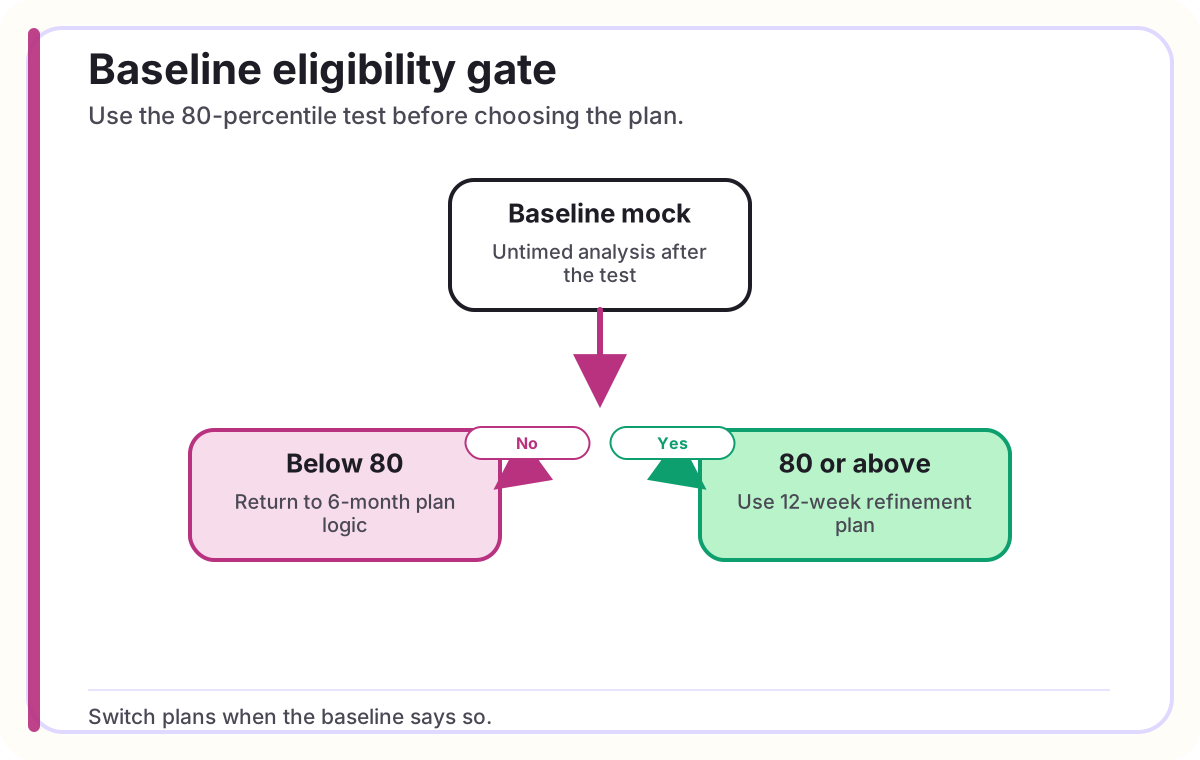
Take one full mock under exam-like timing. If your score is below an 80 percentile equivalent, use a longer plan. If you are at or above that band, a 12-week refinement plan can be reasonable. Use percentile-marks sources as broad reading, not as precise promises [2], [3].
The baseline gate saves you from forcing a plan that the data does not support.
This section should be read against the baseline, not against ambition. For the baseline eligibility test, the operative number is the gap between current performance and target performance. A short plan can work only when that gap is already narrow enough to repair with mocks, sectionals, and error reduction. If the baseline is unstable, spend the next week stabilising measurement before changing the calendar.
Use a two-score rule before drawing conclusions. One mock can be noisy, so compare the latest score with the previous two attempts and the section-level split. The decision is not whether the student feels ready; it is whether the weakest section has enough headroom to survive sectional timing.
Translate the decision into one written gate. For the baseline eligibility test, the gate should contain a number, a date, and a consequence. If the number is missed, the plan changes; if it is hit, the next block continues. This removes negotiation from the middle of a stressful week.
Protect one buffer block inside the baseline eligibility test. The three-month plan has no spare month, so one missed review cannot roll into the next week without a trade-off. Name the trade-off in advance: remove a low-yield topic, reduce a second mock, or shorten a drill block after the main error has been repaired.
Weeks 1-4 - sectional sprint
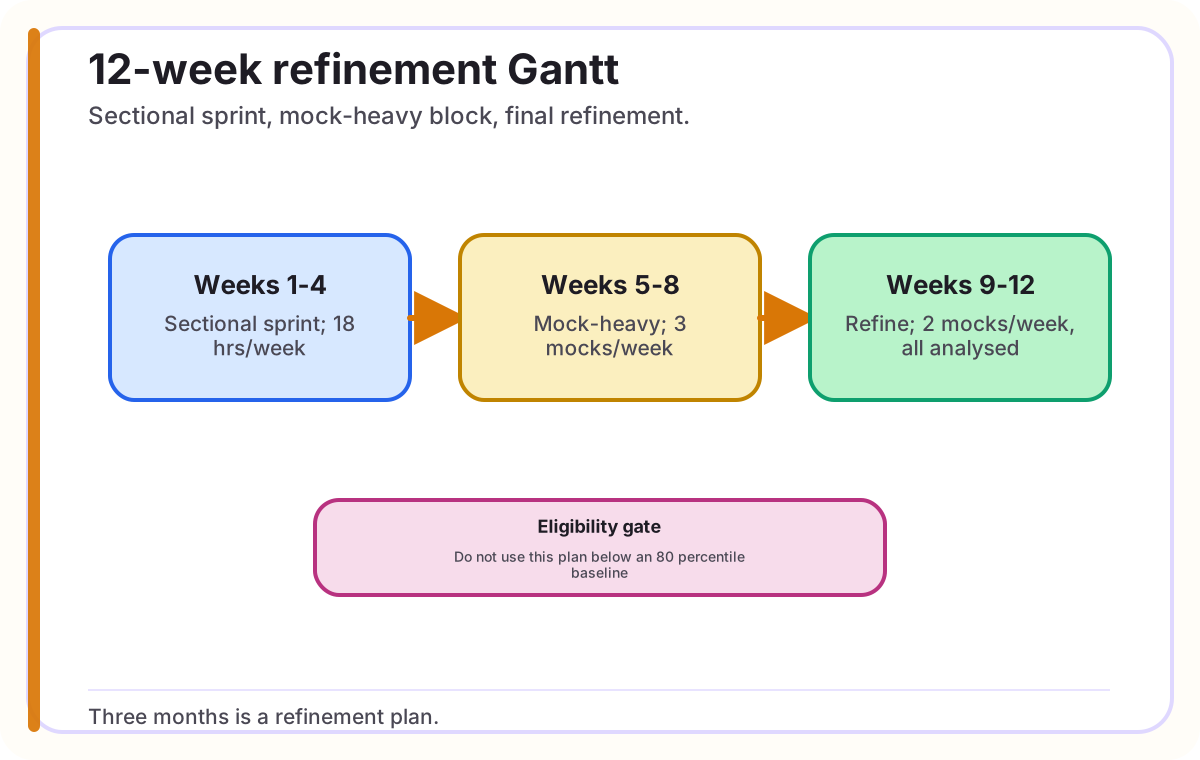
The first 4 weeks are not for new topic collecting. They are for three sectional cycles: test, review, drill. Keep one weak-section block per week and one mixed block for retention.
Your target is a smaller error list, not more solved pages.
This section should be read against the baseline, not against ambition. For weeks 1-4 - sectional sprint, the operative number is the gap between current performance and target performance. A short plan can work only when that gap is already narrow enough to repair with mocks, sectionals, and error reduction. If the baseline is unstable, spend the next week stabilising measurement before changing the calendar.
Use a two-score rule before drawing conclusions. One mock can be noisy, so compare the latest score with the previous two attempts and the section-level split. The decision is not whether the student feels ready; it is whether the weakest section has enough headroom to survive sectional timing.
Translate the decision into one written gate. For weeks 1-4 - sectional sprint, the gate should contain a number, a date, and a consequence. If the number is missed, the plan changes; if it is hit, the next block continues. This removes negotiation from the middle of a stressful week.
Protect one buffer block inside weeks 1-4 - sectional sprint. The three-month plan has no spare month, so one missed review cannot roll into the next week without a trade-off. Name the trade-off in advance: remove a low-yield topic, reduce a second mock, or shorten a drill block after the main error has been repaired.
Weeks 5-8 - mock-heavy block
Three mocks per week is heavy. It works only when the remaining days are review and targeted drills. The annual CAT rules should be checked from the official source, but your weekly plan should be governed by error evidence 1, [6], [7].
If mock review falls behind, reduce mocks before reducing sleep or analysis.
This section should be read against the baseline, not against ambition. For weeks 5-8 - mock-heavy block, the operative number is the gap between current performance and target performance. A short plan can work only when that gap is already narrow enough to repair with mocks, sectionals, and error reduction. If the baseline is unstable, spend the next week stabilising measurement before changing the calendar.
Use a two-score rule before drawing conclusions. One mock can be noisy, so compare the latest score with the previous two attempts and the section-level split. The decision is not whether the student feels ready; it is whether the weakest section has enough headroom to survive sectional timing.
Translate the decision into one written gate. For weeks 5-8 - mock-heavy block, the gate should contain a number, a date, and a consequence. If the number is missed, the plan changes; if it is hit, the next block continues. This removes negotiation from the middle of a stressful week.
Weeks 9-12 - refinement and taper
The last block is for decision rules: which questions to leave, which section order to hold, and which traps repeat. Stop adding new topics unless the topic appears in repeated errors and is fixable in one session.
The final month rewards stable behaviour more than novelty.
This section should be read against the baseline, not against ambition. For weeks 9-12 - refinement and taper, the operative number is the gap between current performance and target performance. A short plan can work only when that gap is already narrow enough to repair with mocks, sectionals, and error reduction. If the baseline is unstable, spend the next week stabilising measurement before changing the calendar.
Use a two-score rule before drawing conclusions. One mock can be noisy, so compare the latest score with the previous two attempts and the section-level split. The decision is not whether the student feels ready; it is whether the weakest section has enough headroom to survive sectional timing.
Translate the decision into one written gate. For weeks 9-12 - refinement and taper, the gate should contain a number, a date, and a consequence. If the number is missed, the plan changes; if it is hit, the next block continues. This removes negotiation from the middle of a stressful week.
When the plan should be rejected
A 3-month plan below the baseline usually leads to shallow coverage and nervous mocks. The 6-month plan gives more time for concepts and sectionals. That choice is more honest and usually less wasteful.
A plan that fits your baseline is better than a plan that sounds ambitious.
This section should be read against the baseline, not against ambition. For when the plan should be rejected, the operative number is the gap between current performance and target performance. A short plan can work only when that gap is already narrow enough to repair with mocks, sectionals, and error reduction. If the baseline is unstable, spend the next week stabilising measurement before changing the calendar.
Use a two-score rule before drawing conclusions. One mock can be noisy, so compare the latest score with the previous two attempts and the section-level split. The decision is not whether the student feels ready; it is whether the weakest section has enough headroom to survive sectional timing.
Translate the decision into one written gate. For when the plan should be rejected, the gate should contain a number, a date, and a consequence. If the number is missed, the plan changes; if it is hit, the next block continues. This removes negotiation from the middle of a stressful week.
What to do today
Do not design the calendar first. Take the mock first, analyse it, and then choose the 12-week plan only if the baseline supports it.
Your target is one decision: 3-month route or longer route.
This section should be read against the baseline, not against ambition. For what to do today, the operative number is the gap between current performance and target performance. A short plan can work only when that gap is already narrow enough to repair with mocks, sectionals, and error reduction. If the baseline is unstable, spend the next week stabilising measurement before changing the calendar.
Use a two-score rule before drawing conclusions. One mock can be noisy, so compare the latest score with the previous two attempts and the section-level split. The decision is not whether the student feels ready; it is whether the weakest section has enough headroom to survive sectional timing.
Translate the decision into one written gate. For what to do today, the gate should contain a number, a date, and a consequence. If the number is missed, the plan changes; if it is hit, the next block continues. This removes negotiation from the middle of a stressful week.
FAQs
Can a beginner prepare for CAT in 3 months?
A beginner should usually avoid a 3-month plan. It is better suited to someone already near an 80 percentile baseline.
How many mocks should I take in a 3-month plan?
Use 2 to 3 mocks per week only in the middle block and only when analysis is complete.
What is the first step in a 3-month plan?
Take a full baseline mock. The result decides whether the plan is realistic.
What should I study in the first 4 weeks?
Focus on sectional repair: test, review, drill, and repeat.
What if my baseline is below 80 percentile?
Switch to the 6-month logic if time allows. If the exam is closer, narrow the goal and protect accuracy first.
Conclusion
Choose the next 7 days, not the full season. Put the hours or mocks on the calendar, then review what actually happened before you expand the plan.
Related reading
References
- Indian Institutes of Management, "Common Admission Test official website," 2025. [Online]. Available: https://iimcat.ac.in/ [2] The Economic Times, "CAT 2025 Notification Released: Registration begins August 1 at iimcat.ac.in," 2025. [Online]. Available: https://economictimes.indiatimes.com/news/new-updates/cat-2025-notification-released-at-iimcat-ac-in-exam-on-november-30-registrations-begin-august-1-at-iimcat-ac-in/articleshow/122932378.cms [3] 2IIM, "CAT previous year question papers," 2025. [Online]. Available: https://online.2iim.com/CAT-question-paper/ [4] Cracku, "CAT previous papers," 2025. [Online]. Available: https://cracku.in/cat-previous-papers [5] IMS India, "CAT syllabus and preparation guide," 2025. [Online]. Available: https://www.imsindia.com/blog/cat/cat-syllabus/ [6] MBAUniverse, "CAT syllabus and exam pattern," 2025. [Online]. Available: https://www.mbauniverse.com/articles/cat-syllabus [7] Career Launcher, "CAT exam pattern," 2025. [Online]. Available: https://www.careerlauncher.com/cat-mba/exam-pattern/ [8] Shiksha, "CAT exam pattern," 2025. [Online]. Available: https://www.shiksha.com/mba/cat-exam-pattern ↩