Topic Guide
When CAT mock scores plateau: the diagnosis
A mock-score plateau is common between mocks 7 and 15. The student has learned the exam format, but the next layer of improvement depends on review quality. More mocks can maintain the plateau if the same error loop returns. The first task is diagnosis.
The plateau pattern
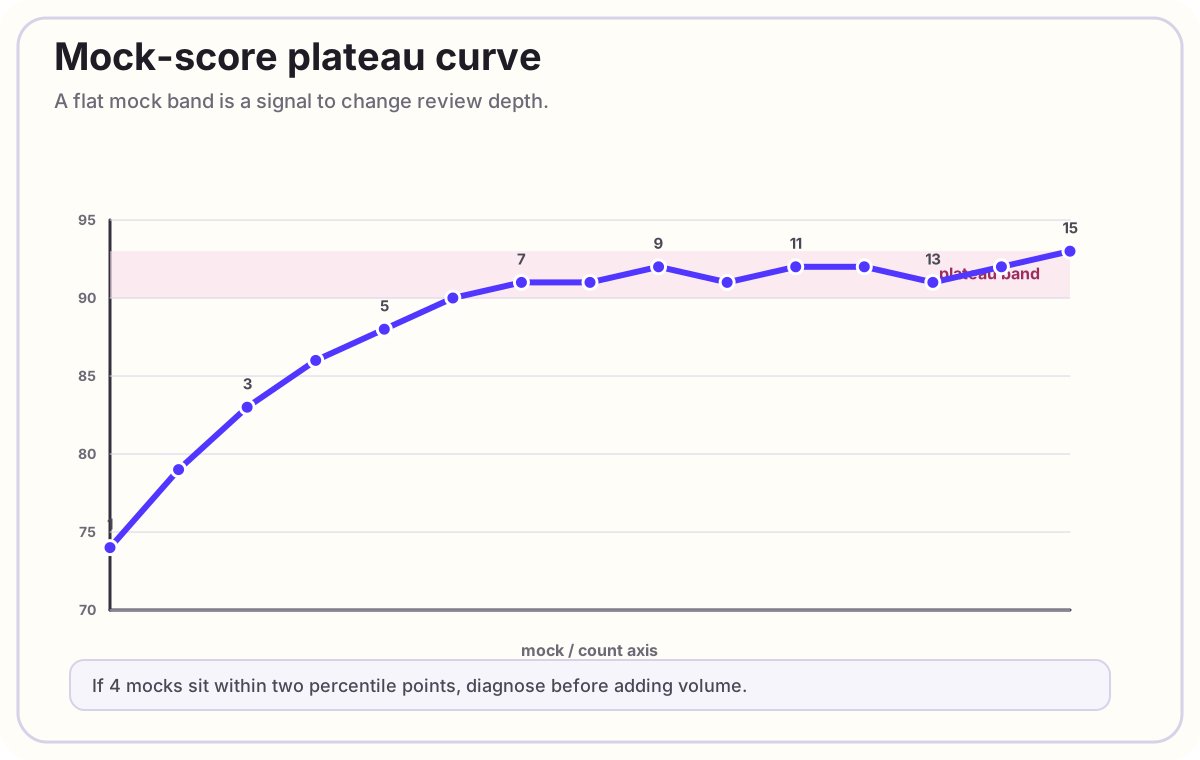
A single bad mock is not a plateau. A plateau appears when 3 to 4 mocks sit inside a narrow percentile band despite continued practice. That pattern means the student is repeating the same limitations under exam conditions.
Track the band by percentile and raw score. If both are flat, the repair needs to change.
Diagnosis 1: review depth
A review that says 'silly mistake' is not a repair. The same error will return because the trigger was not named. Replace broad labels with specific codes: formula recall, scope trap, setup table, time drift, or passage order.
Then write the repair action for the next 7 days.
Diagnosis 2: topic blind spot
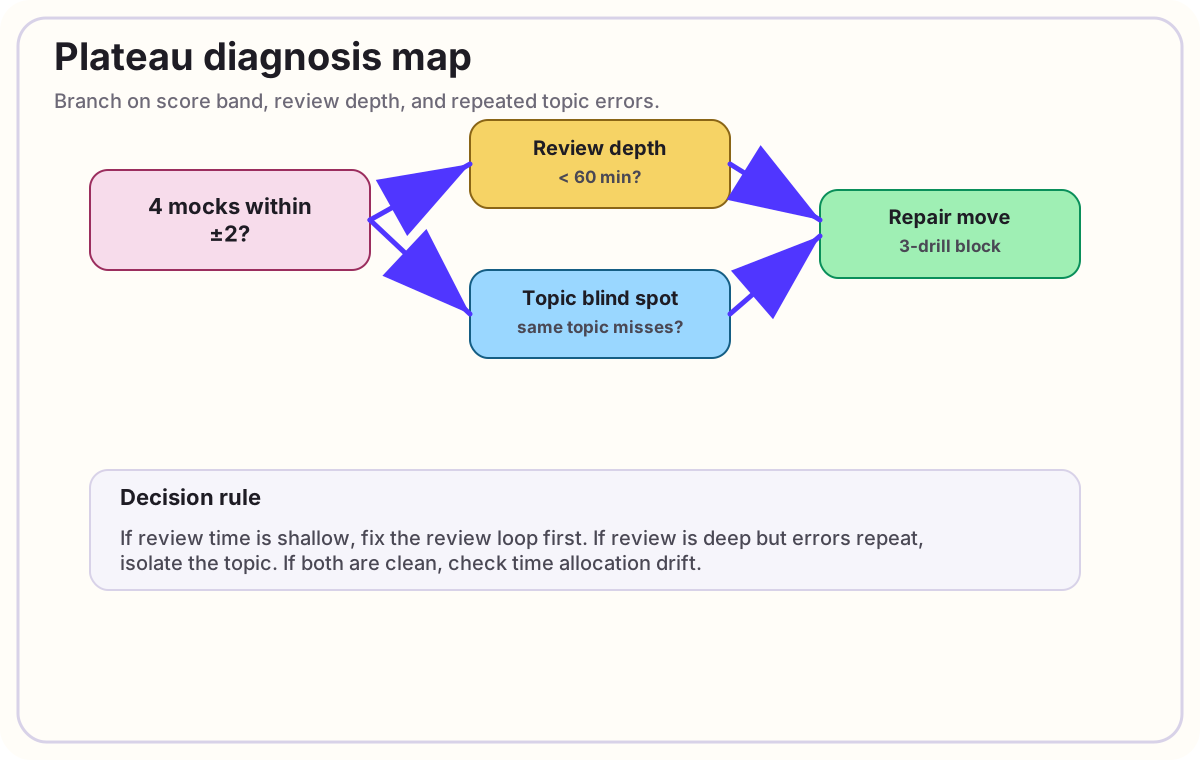
QA and DILR plateaus often come from a narrow blind spot. The average section score looks stable, but one topic family leaks marks every time.
Filter the spreadsheet by topic. If the same cluster appears 3 times in 5 mocks, run a 3-day repair block before the next full-length mock.
Diagnosis 3: time-allocation drift
Time drift happens when the student spends 4 minutes trying to save a weak item and then loses two clean items later. The score does not improve because effort is being spent in low-return zones.
The repair is a decision rule: leave after a fixed threshold when no path is visible.
When to ask for a mentor reset
A mentor reset is most useful when the spreadsheet shows a repeated pattern but the student cannot pick the repair. Bring 4 mock sheets, not one score screenshot.
The meeting should end with one section rule, one topic repair, and one review routine for the next 7 days.
The plateau test
One flat score is not a plateau. A plateau usually means three or more mocks landing within about 2 percentile points while the student has completed the usual review. That definition matters because a single hard paper can look like stagnation. The pattern must repeat before changing the plan [6], [11], [12].
Once the pattern repeats, split the diagnosis into review depth, topic blind spot, and time-allocation drift. Each diagnosis has a different repair. Review depth needs a better error log. A topic blind spot needs targeted practice. Time-allocation drift needs timed decision drills.
Why more mocks may not fix it
A mock measures the current system. If the system does not change between mocks, the next score is likely to confirm the same pattern. This is why students can take many papers and still feel stuck. The missing step is usually the repair block between measurements.
The repair block should be small and visible. Pick one error code, run 6 to 10 targeted questions, write the decision rule, and retest it in a sectional or the next full mock. A plateau breaks when the repeated error changes, not when the candidate feels busier.
When to ask for a reset review
If four mocks stay flat and the review sheet has been completed honestly, ask a mentor or strong peer to inspect the error log. The outside reviewer should not give generic advice. They should name one of three patterns: wrong question selection, shallow concept repair, or unstable time allocation.
A reset review should end with one 7-day experiment. For example, cap QA arithmetic questions at 90 seconds, attempt only two DILR sets, or force a VARC passage-order rule. The next mock then tests that experiment.
FAQs
What is CAT mock score not improving?
CAT mock score not improving is the article's main operating idea. Read it as a decision rule with a number attached, not as a loose definition.
Which source should I trust first?
Use official CAT or institute pages for policy claims, then use coaching analyses for paper-pattern interpretation and academic studies for learning-strategy claims.
How often should this article be refreshed?
Refresh it once every CAT admission cycle, and sooner if an official institute policy page publishes a new PDF.
What is the practical next step?
Write the main number from this article into your mock sheet or shortlist sheet today, then check it after the next mock.
How does this link to Clymber preparation?
It turns a vague CAT-prep question into one measurable decision that can be reviewed by a student or mentor within 7 days.
Conclusion
Use this article as a working sheet, not only as a reading page. Record the main number for your target case, apply it to the next mock or shortlist decision, and review the result within 7 days.
Related reading
- /blog/cat-mock-test-playbook
- /blog/cat-mock-analysis
- /plans/mentor-pro
- /blog/how-many-cat-mocks
- /plans/self-study
References
- 2IIM, "CAT previous year papers and CAT paper database." Available: https://online.2iim.com/CAT-question-paper/. Accessed: 15-Jun-2026. [2] Cracku, "CAT previous year papers and section-wise analysis." Available: https://cracku.in/cat-previous-papers. Accessed: 15-Jun-2026. [3] IMS India, "CAT syllabus and exam pattern overview." Available: https://www.imsindia.com/blog/cat/cat-syllabus/. Accessed: 15-Jun-2026. [4] MBAUniverse, "CAT exam pattern and syllabus guide." Available: https://www.mbauniverse.com/cat/exam-pattern. Accessed: 15-Jun-2026. [5] J. Dunlosky et al., "Improving students' learning with effective learning techniques." Available: https://journals.sagepub.com/doi/10.1177/1529100612453266. Accessed: 15-Jun-2026. [6] H. L. Roediger III and J. D. Karpicke, "Test-enhanced learning: taking memory tests improves long-term retention." Available: https://doi.org/10.1111/j.1467-9280.2006.01693.x. Accessed: 15-Jun-2026. [7] A. Reddy et al., "Spaced learning and retrieval practice in education." Available: https://pmc.ncbi.nlm.nih.gov/articles/PMC5126970/. Accessed: 15-Jun-2026. [8] IIM CAT, "CAT official website." Available: https://iimcat.ac.in. Accessed: 15-Jun-2026. ↩