Topic Guide
CAT glossary: every important term explained
Most CAT confusion is vocabulary confusion. Percentile, scaled score, cutoff, composite score, and TITA are not interchangeable terms. This glossary index groups the terms by what they do: scoring, admissions, exam-day format, and preparation. Use it when a term blocks your understanding of a blog, scorecard, or IIM admission page.
Scoring terms
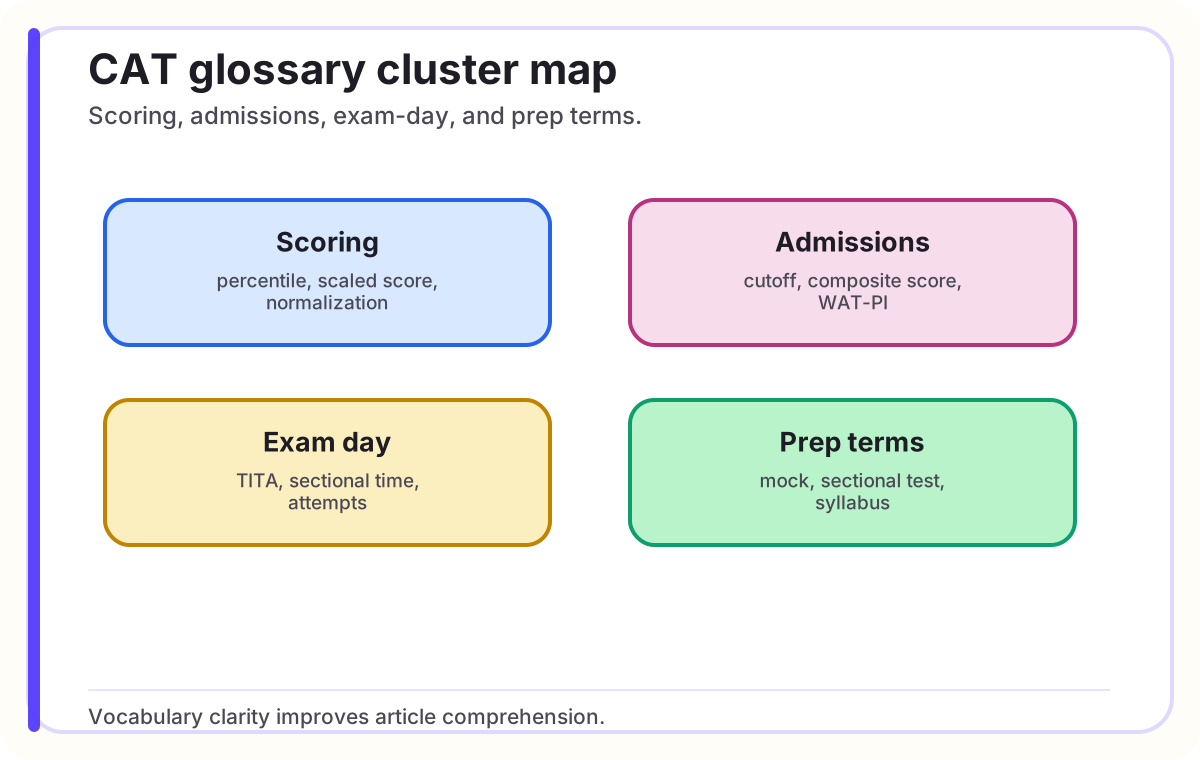
Start with raw score, scaled score, percentile, OA percentile, normalization, and equi-percentile. CAT uses score scaling because slots can differ in difficulty, so scoring terms must be kept precise 1, [3].
Read scoring terms before reading marks-versus-percentile articles.
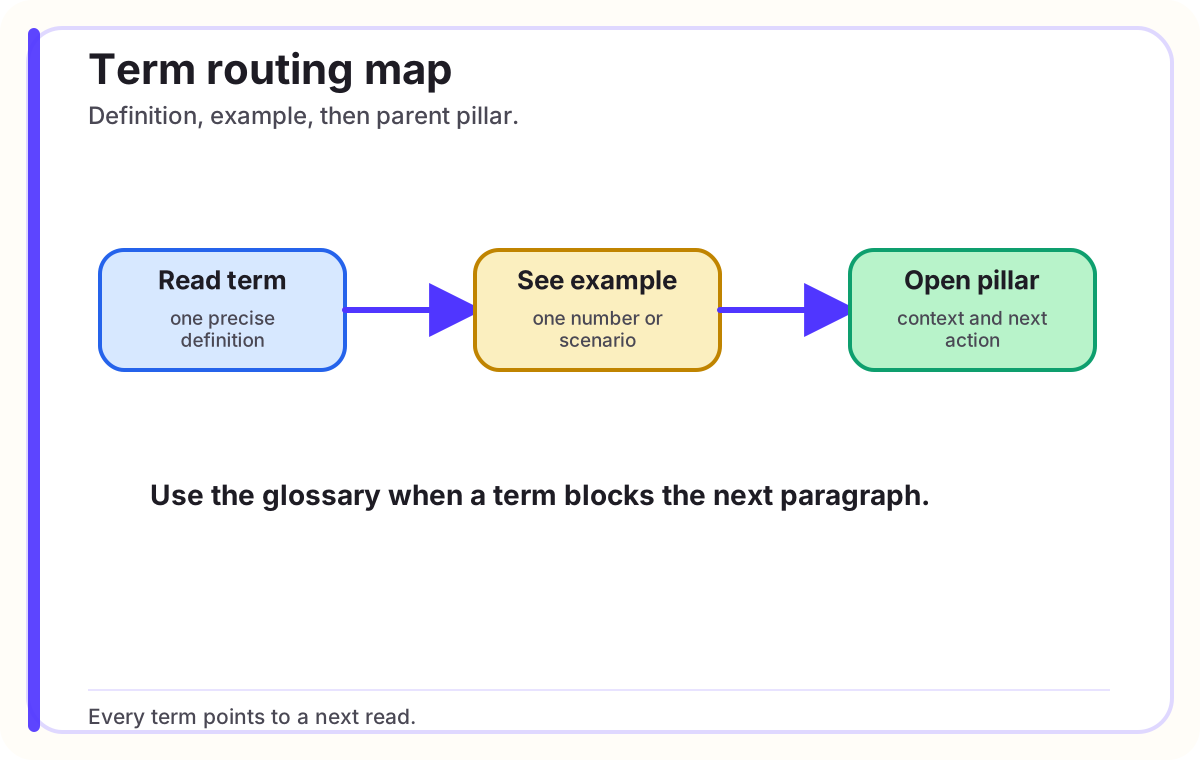
The glossary works when each term has one definition, one example, and one parent article. For scoring terms, avoid writing a mini-pillar inside the index. The index should route the reader to the right definition page, then onward to the pillar where the term affects a real prep or admissions decision.
Keep internal links functional rather than decorative. A scoring term should point toward percentile and normalization pages; an admissions term should point toward cutoff and composite-score pages; an exam-day term should point toward the pattern page. The reader should have one next click, not a list that looks comprehensive but feels hard to use.
Use one example per term group. For scoring terms, the example should show how the term changes an actual decision: whether to interpret a score, open an admissions page, read the pattern guide, or return to a prep plan. That keeps the index from becoming a dictionary without action.
Admissions terms
Admissions vocabulary includes sectional cutoff, overall cutoff, composite score, Application Rating, WAT, PI, CAP, and JAP. Institute pages use these terms inside formulas, so loose definitions can produce wrong expectations 1.
Admissions terms decide whether a high CAT score is enough for a shortlist.
The glossary works when each term has one definition, one example, and one parent article. For admissions terms, avoid writing a mini-pillar inside the index. The index should route the reader to the right definition page, then onward to the pillar where the term affects a real prep or admissions decision.
Keep internal links functional rather than decorative. A scoring term should point toward percentile and normalization pages; an admissions term should point toward cutoff and composite-score pages; an exam-day term should point toward the pattern page. The reader should have one next click, not a list that looks comprehensive but feels hard to use.
Use one example per term group. For admissions terms, the example should show how the term changes an actual decision: whether to interpret a score, open an admissions page, read the pattern guide, or return to a prep plan. That keeps the index from becoming a dictionary without action.
Exam-day terms
Exam-day terms include VARC, DILR, QA, MCQ, TITA, sectional time, slot, and response sheet. These terms become important when official notifications and answer keys are released 1, [2].
The exam-day group explains what you will see on screen.
The glossary works when each term has one definition, one example, and one parent article. For exam-day terms, avoid writing a mini-pillar inside the index. The index should route the reader to the right definition page, then onward to the pillar where the term affects a real prep or admissions decision.
Keep internal links functional rather than decorative. A scoring term should point toward percentile and normalization pages; an admissions term should point toward cutoff and composite-score pages; an exam-day term should point toward the pattern page. The reader should have one next click, not a list that looks comprehensive but feels hard to use.
Use one example per term group. For exam-day terms, the example should show how the term changes an actual decision: whether to interpret a score, open an admissions page, read the pattern guide, or return to a prep plan. That keeps the index from becoming a dictionary without action.
Preparation terms
Preparation vocabulary includes mock test, sectional test, topic drill, error log, accuracy, attempt rate, and review block. Syllabus and exam-pattern sources are useful only when these terms are operational [6], [8].
A plan is clearer when every prep term names an action.
The glossary works when each term has one definition, one example, and one parent article. For preparation terms, avoid writing a mini-pillar inside the index. The index should route the reader to the right definition page, then onward to the pillar where the term affects a real prep or admissions decision.
Keep internal links functional rather than decorative. A scoring term should point toward percentile and normalization pages; an admissions term should point toward cutoff and composite-score pages; an exam-day term should point toward the pattern page. The reader should have one next click, not a list that looks comprehensive but feels hard to use.
How to use the glossary
Each term should answer three questions: what it means, where it appears, and what to do with it. After that, route to the parent pillar for context.
Do not read glossary entries as isolated trivia.
The glossary works when each term has one definition, one example, and one parent article. For how to use the glossary, avoid writing a mini-pillar inside the index. The index should route the reader to the right definition page, then onward to the pillar where the term affects a real prep or admissions decision.
Keep internal links functional rather than decorative. A scoring term should point toward percentile and normalization pages; an admissions term should point toward cutoff and composite-score pages; an exam-day term should point toward the pattern page. The reader should have one next click, not a list that looks comprehensive but feels hard to use.
What to do today
Choose 3 terms from scoring, admissions, or exam day. Read those definitions before returning to the article you were reading.
Your target is 3 clarified terms today.
The glossary works when each term has one definition, one example, and one parent article. For what to do today, avoid writing a mini-pillar inside the index. The index should route the reader to the right definition page, then onward to the pillar where the term affects a real prep or admissions decision.
Keep internal links functional rather than decorative. A scoring term should point toward percentile and normalization pages; an admissions term should point toward cutoff and composite-score pages; an exam-day term should point toward the pattern page. The reader should have one next click, not a list that looks comprehensive but feels hard to use.
FAQs
What is a CAT glossary?
A CAT glossary is an index of important exam, scoring, admissions, and preparation terms with precise definitions.
Which CAT terms should I learn first?
Start with percentile, scaled score, normalization, sectional cutoff, composite score, and TITA.
Is percentile the same as marks?
No. Marks are score points. Percentile is a rank position after scoring and scaling.
Why do IIM admissions terms matter?
Admissions pages use terms like cutoff, composite score, WAT, and PI inside selection rules. Mixing them creates wrong expectations.
How should I use this glossary?
Read the term definition, then open the linked parent article for context and next action.
Conclusion
Pick the 3 terms that currently feel blurry and read those entries first. Clear definitions make the next strategy article easier to use.
Related reading
- CAT percentile explained
- IIM cutoffs explained
- normalization
- scaled score
- composite score
- equi-percentile
References
- Indian Institutes of Management, "Common Admission Test official website," 2025. [Online]. Available: https://iimcat.ac.in/ [2] The Economic Times, "CAT 2025 Notification Released: Registration begins August 1 at iimcat.ac.in," 2025. [Online]. Available: https://economictimes.indiatimes.com/news/new-updates/cat-2025-notification-released-at-iimcat-ac-in-exam-on-november-30-registrations-begin-august-1-at-iimcat-ac-in/articleshow/122932378.cms [3] The Times of India, "CAT 2025 results: 12 candidates score 100 percentile, 9 from non-engineering backgrounds," 2025. [Online]. Available: https://timesofindia.indiatimes.com/education/news/cat-2025-results-12-candidates-score-100-percentile-9-from-non-engineering-backgrounds/articleshow/126171290.cms [4] 2IIM, "CAT previous year question papers," 2025. [Online]. Available: https://online.2iim.com/CAT-question-paper/ [5] Cracku, "CAT previous papers," 2025. [Online]. Available: https://cracku.in/cat-previous-papers [6] Career Launcher, "CAT exam pattern," 2025. [Online]. Available: https://www.careerlauncher.com/cat-mba/exam-pattern/ [7] Shiksha, "CAT exam pattern," 2025. [Online]. Available: https://www.shiksha.com/mba/cat-exam-pattern [8] MBAUniverse, "CAT syllabus and exam pattern," 2025. [Online]. Available: https://www.mbauniverse.com/articles/cat-syllabus ↩