Quick Read
Mensuration for CAT: surface, volume, and the 4 solids
Mensuration is less about creative insight and more about recall under time. If the formula is available instantly, the problem often becomes arithmetic. If the formula is not available, the item consumes time that should belong to algebra or arithmetic. Use this guide as a compact recall sheet for cube, cuboid, cylinder, cone, and sphere cases.
The 4 solids to know first
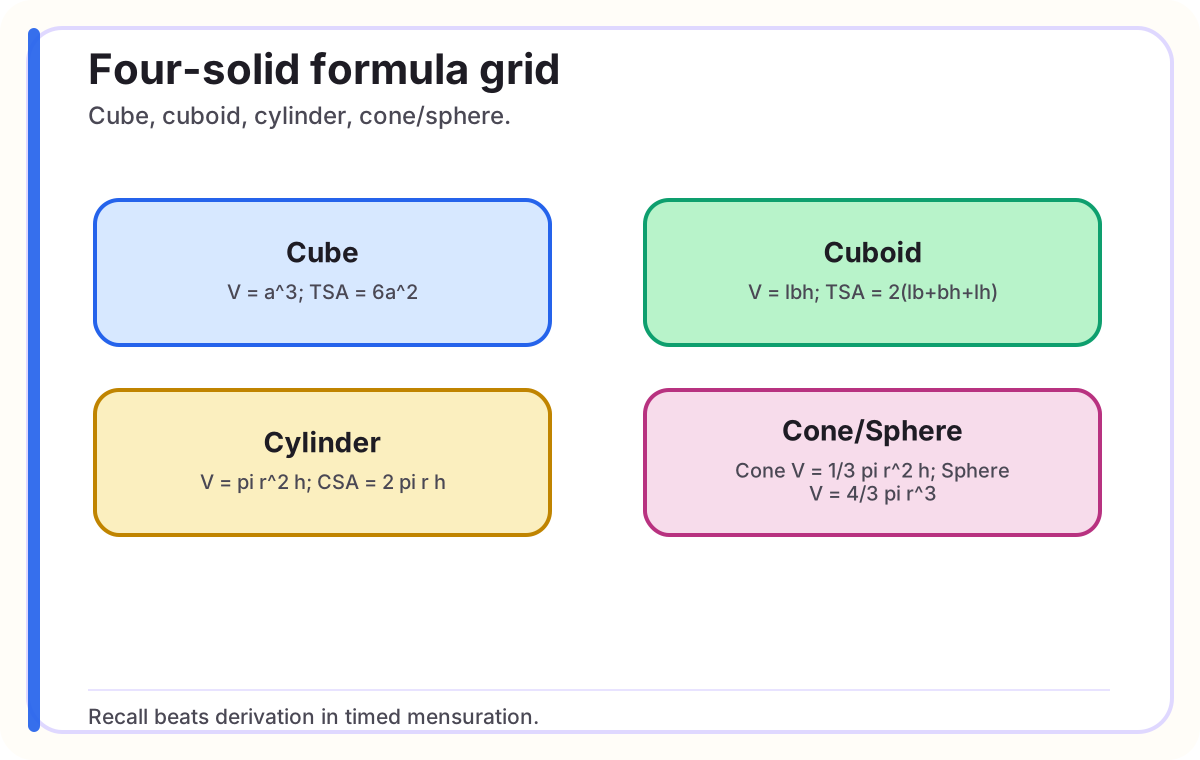
Start with the objects that appear in school-level geometry and CAT QA practice: cube, cuboid, cylinder, cone, and sphere. Past paper databases help you identify when a question is only a formula recall item and when it requires a geometry relation first [2], [3].
Group cone and sphere together because many CAT-style questions pair them through radius, height, or volume conversion.
Keep this as a recall-and-units checkpoint. In the 4 solids to know first, write the unit first: square units point to area, cubic units point to volume, and mixed language usually asks for a conversion before the formula. NCERT geometry language remains a useful base for formula vocabulary, while CAT practice sets show how those formulas get compressed into exam-style prompts [2], [8].
The 8 formulas
The recall list is small: cube volume and total surface area; cuboid volume and total surface area; cylinder volume and curved surface area; cone volume and curved surface area; sphere volume and surface area. NCERT is enough for formula grounding [8].
Write the formula sheet once by hand and then test it after 6 hours.
Keep this as a recall-and-units checkpoint. In the 8 formulas, write the unit first: square units point to area, cubic units point to volume, and mixed language usually asks for a conversion before the formula. NCERT geometry language remains a useful base for formula vocabulary, while CAT practice sets show how those formulas get compressed into exam-style prompts [2], [8].
Surface versus volume
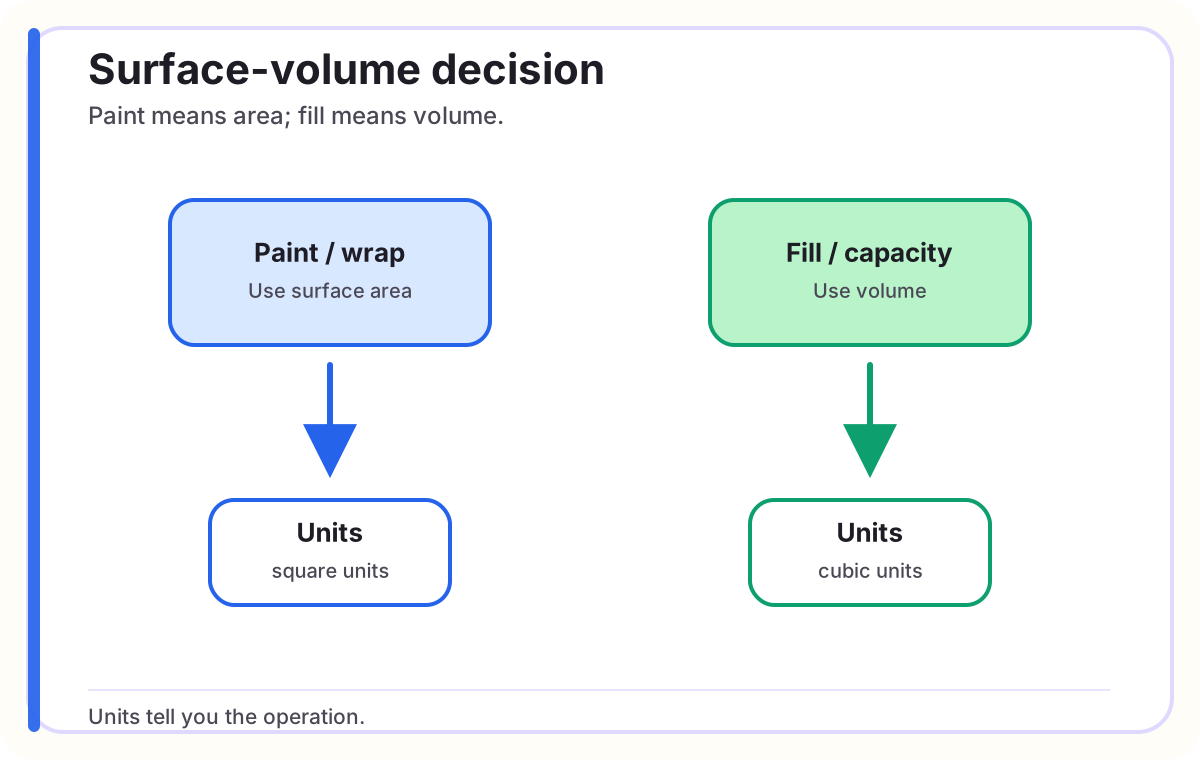
The fastest decision often comes from units. Square units mean area. Cubic units mean volume. A question about painting a tank uses surface area; a question about filling it uses volume.
Use the language of the problem to avoid formula drift.
Keep this as a recall-and-units checkpoint. In surface versus volume, write the unit first: square units point to area, cubic units point to volume, and mixed language usually asks for a conversion before the formula. NCERT geometry language remains a useful base for formula vocabulary, while CAT practice sets show how those formulas get compressed into exam-style prompts [2], [8].
Frustum and hemisphere cases
A hemisphere uses half the sphere volume, but surface-area questions may need curved surface or total surface depending on whether the circular base is exposed. A frustum is a cut cone and should be practised after the main cone formulas are stable.
Do not start mensuration from frustum problems. Start from the 8 formulas.
Practice routine
Use 10 five-minute recall checks across a week. Write the object, draw the shape, and write the formula. Then solve one short problem. Format sources track exam structure, but recall speed must be built offline 1, [6], [7].
Mark formula misses separately from arithmetic misses.
What to do today
Write the formulas once now and once later today without looking. If any formula fails twice, put it on a separate card.
Your first target is 8 correct formulas twice in one day.
FAQs
Is mensuration high-frequency in CAT?
Mensuration is not the largest QA area, but direct formula items can be efficient marks when recall is strong.
Which mensuration formulas should I learn first?
Start with cube, cuboid, cylinder, cone, and sphere volume and surface formulas.
How do I decide surface area versus volume?
Use the action word and units. Painting or wrapping points to area; filling or capacity points to volume.
Should I memorise frustum formulas?
Learn frustum after the base cone and cylinder formulas are stable. It is an add-on, not the first recall target.
How many mensuration problems should I practise?
Use 8 to 10 formula recall checks and 6 to 8 mixed problems in the first week.
Conclusion
Use the next practice session to test the method on a small set, then record the exact error type. One clean error category is more useful than 20 unreviewed solutions.
Related reading
References
- Indian Institutes of Management, "Common Admission Test official website," 2025. [Online]. Available: https://iimcat.ac.in/ [2] 2IIM, "CAT previous year question papers," 2025. [Online]. Available: https://online.2iim.com/CAT-question-paper/ [3] Cracku, "CAT previous papers," 2025. [Online]. Available: https://cracku.in/cat-previous-papers [4] IMS India, "CAT syllabus and preparation guide," 2025. [Online]. Available: https://www.imsindia.com/blog/cat/cat-syllabus/ [5] MBAUniverse, "CAT syllabus and exam pattern," 2025. [Online]. Available: https://www.mbauniverse.com/articles/cat-syllabus [6] Career Launcher, "CAT exam pattern," 2025. [Online]. Available: https://www.careerlauncher.com/cat-mba/exam-pattern/ [7] Shiksha, "CAT exam pattern," 2025. [Online]. Available: https://www.shiksha.com/mba/cat-exam-pattern [8] National Council of Educational Research and Training, "NCERT textbook portal," 2025. [Online]. Available: https://ncert.nic.in/textbook.php ↩